


For American real estate developers, the first LED display project goes far beyond simply “buying an advertising screen”—it is a strategic investment for boosting property landmark value, strengthening brand influence, and maximizing sales or leasing conversions. Especially in commercial real estate, mixed-use complexes, or luxury communities, outdoor LED displays have become the “digital facade” of buildings—presenting dynamic project information and artistic content that make a strong visual statement, and ultimately delivering both a rise in property value and brand premium.

Real Estate Developer LED Display Site
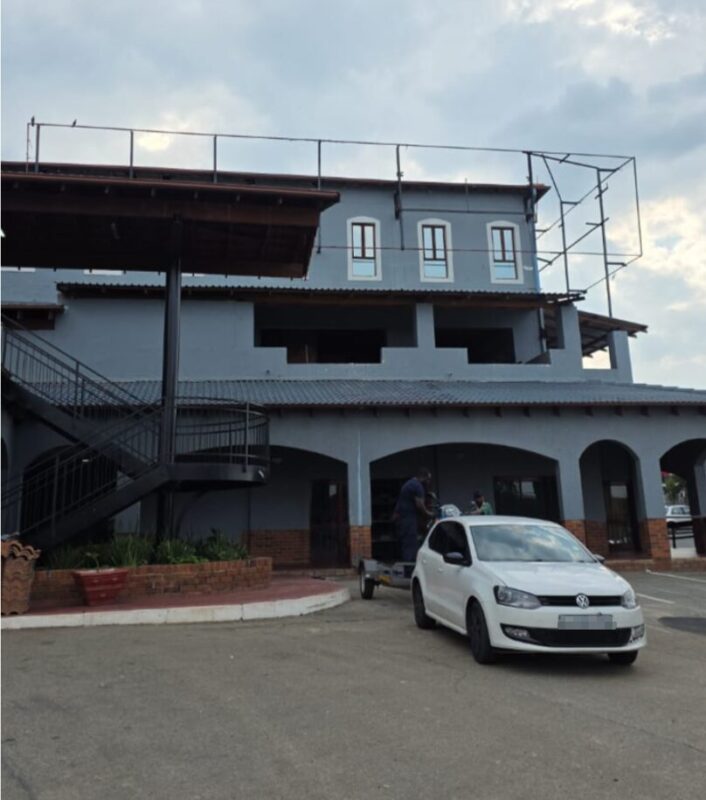
Real Estate Developer LED Display Site
Critically, the safe implementation of facade LED projects depends on professional structural design and precise weight control—these are vital for building safety and long-term stability. This article, tailored toward the real needs of U.S. real estate (long-term ownership, compliance, energy efficiency, installation safety), draws on proven custom solutions to provide developers a full-process reference: from product selection and technical specs to project execution, helping you avoid costly decision traps and achieve the best possible outcome.
I. Core Demands for Real Estate LED Screens: Shift from “Advertising” to “Asset Appreciation + Safe Implementation”
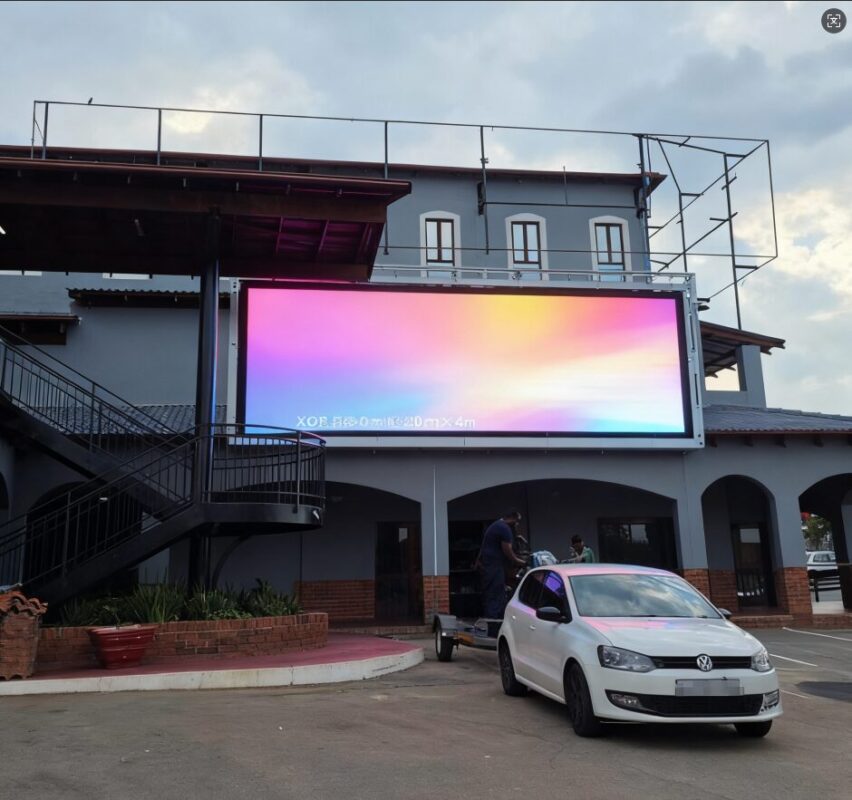
Real Estate Company Outdoor LED Display
LED displays for real estate must meet needs that are distinct from pure advertising screens: long-term ownership, low-frequency replacement, high reliability, and absolute safety, with three main goals:
1. Landmark Visual Enhancement—Increase Property Recognition
The U.S. urban landscape is highly competitive, especially near commercial districts and transportation hubs. Stylish outdoor LED displays let a building stand out. Large-format screens (20m×4m, 30m×4m) can turn the facade into a “digital art wall” with animated logos and architectural content, making the property a local landmark and indirectly improving lease rates and tenant attraction.
Data shows that commercial properties with high-quality LED screens see lease signing periods reduced by 15% and rental premiums up to 8%-12%.
2. Accurate Information Delivery—Supporting All Real Estate Scenarios
A real estate LED screen must serve all stages:
-
Development: Display renderings and blueprints
-
Leasing: Announce tenant policies and updates
-
Operation: Share community news and events
Thus, solutions must enable flexible content updates and simple operation, with remote cloud management—requiring no special technical team and fitting the U.S. demand for “lightweight operations.”
3. Safety First + Long-Term Reliability—Full Cost Control
U.S. building codes on structural safety and load-bearing are extremely strict, while labor and maintenance costs are very high. Developers demand “structural safety, low failure rates, ease of maintenance, and energy efficiency.”
-
Professional structural design is vital so the installation does not impact building safety.
-
Choose high-protection, durable products to avoid the cost of weather damage (e.g., storms, hurricanes) and frequent breakdowns.
-
Energy-saving designs can dramatically reduce electricity bills, comply with LEED green building standards, and boost property ratings.
Integrated Engineering Best Practice:
Throughout custom LED facade projects, the project design ability of the structural team is crucial—especially for steel framework load calculations. All wall-mounted installations must have correct specs for rebar and frame thicknesses, matched with on-site capacity assessments. If products are purchased for self-installation, buyers must request accurate weight data from the LED manufacturer (allowing no significant deviation) and provide this to the structural designers. Excessive weight inaccuracy is a safety hazard.
II. Solution Core: Product Selection and Technical Parameters (U.S. Adaptation)
LED choices must strike a balance between display fidelity, durability, cost, and safety compatibility, matched to U.S. contexts (steel frames, long viewing distances, strict safety codes):
1. Preferred Product Series: Outdoor Fixed XOF Pro/Max
-
All Aluminum-Alloy Construction: Die-cast aluminum modules and cases, optimized for corrosion resistance and heat dissipation, work for both East Coast humidity and West Coast dryness.
-
Aluminum alloy not only delivers strength but also sharply reduces product weight—at least 30% less than traditional iron cabinets—reducing the load on building structures.
-
High Protection Grade: IP65/IP66, fully dust/waterproof for storm, wind, and sand—fully compliant with U.S. outdoor electronics/legal requirements.
-
Common Cathode Energy Saving: Cuts power consumption by 30%-40% vs. traditional screens. For a 100㎡ display, this can save $2,000–3,000 per year in electricity, with significant cost breakdown for long-term ownership.
-
Flexible Maintenance: Dual front/rear access modes mean modules, power, and system cards can be replaced individually, minimizing expensive U.S. labor costs.
-
Precision Weight Control: Manufacturers provide detailed weight specs (panel/module/screen total), deviation within ±2%, supporting steel structure design/assessment and minimizing structural safety risks.
-
Ultra-Long Lifespan: LED diodes rated for 100,000 hours, delivering reliable 10+ year lifetime in line with real estate ROI cycles.
2. Key Technical Specs (by screen size)
| Project | 20m×4m (80㎡) | 30m×4m (120㎡) |
|---|---|---|
| Pixel Pitch | P6.67/P8 (20–50m) | P6.67/P8 |
| Physical Res. | 3000 × 600 | 4500 × 600 |
| Brightness | ≥5000 cd/m² (adjustable) | ≥5000 cd/m² (sun-proof) |
| Refresh Rate | ≥3840Hz (anti-flicker, HD) | ≥3840Hz (event/live streaming) |
| Contrast | 5000:1 | 5000:1 |
| Viewing Angle | 140° (H)/140° (V) | 140° (H)/140° (V) |
| Protection | IP65 (US outdoor std) | IP65 |
| Avg. Power | 200–250 W/㎡ | 200–250 W/㎡ |
| Screen Weight | ~960–1200 kg | ~1440–1800 kg |
| Control System | NovaStar/cloud management | NovaStar/multi-screen |
3. U.S. Selection Points:
-
Pixel Pitch: Most sites are open-air; P6.67/P8 is the best value for clarity/cost over 20m; P5 gives max effect if budget suffices (+20%-30% in cost).
-
Compliance: Must pass FCC and UL electrical standards—no compliance, no sign-off.
-
Wind-Load Design: Coastal areas (Florida/California) need ≥150mph wind-load.
-
Weight Certification: Require third-party weight testing/certification. All data (per module, full screen) deviation must be within ±2% for structural design safety.
III. Implementation: Installation & Management (U.S. Norms, Structural Safety Emphasis)
The installation must put safety, precision surveying, and regulatory compliance first—especially coordinating steel frame design, building load assessment, and not compromising the primary structure.
1. Pre-Install: Prioritize Structural Safety (Survey & Design)
-
Site Survey & Loading: Engineers and certified structural designers evaluate site load-bearing, full environmental factors (wind, seismic codes), and a detailed measurement of frame specs and utility connections (110V/220V), avoiding building damage.
-
Dedicated Steel-Structure Design:
-
Calculate rebar/h-beam/channel-beam gauge, thickness, spacing (according to total screen weight and wind/seismic loads), with ≥30% margin.
-
Fixing methods must use chemical/expansion anchors compliant with U.S. codes and connect solidly to the building.
-
Design wind/seismic resistance per local weather/seismic data to avoid drop-off during storms/quakes.
-
-
Weight Verification:
-
Conduct on-site panel weight checks before final install, ensuring deviation matches factory paperwork.
-
If over spec, revise the steel frame before proceeding—never install overweight screens.
-
2. Construction & Onsite Execution:
-
Electricals/Wiring: N+1 redundant power (backup supplies), fiber-optic transmission for signal, and all work to NEC code by licensed electricians.
-
Modular Install: 5–7 days (for large screen), with modular assembly to cut high-altitude work and maximize safety; all crews OSHA-certified, with full site safety barricades.
-
Commissioning: Calibrate color/brightness, remote management, and 72-hour burn-in to validate operational and structural integrity.
3. Third-Party/Self-Install Cautions (if owner installs):
-
Buyer must demand precise weight data (panel, screen, COG) to share with their structural engineer. Guesswork is prohibited.
-
Only teams with U.S. steelwork certification should do the frame installation; all specs and assembly must adhere strictly to the engineered plan.
-
Run load tests (e.g. using sandbags) to ensure zero deformation or movement before hanging the actual screen.
4. Timeline Overview (4–6 weeks):
-
1–2 weeks: Custom production + steel design
-
1–2 weeks: International shipping/customs (with FCC/UL/weight docs)
-
7–10 days: Steelwork plus screen install/commissioning
-
1–2 days: Staff training and official safety sign-off
IV. Content Management & Application: Making the Display a Value Tool
-
Management System: Lightweight cloud-based controls (web/mobile), easy remote content uploads, templates for brand/project/tenant info.
-
Key Application Scenarios:
-
Brand Landmarks: Animated logos and corporate vision for chain-wide consistency.
-
Project Sales/Marketing: HD walkthroughs and show units—attracts investors and tenants.
-
Tenant & Leasing Comms: Real-time unit status and policies with promotional pushes.
-
Community Management: Events, notices, and even holiday greetings for resident engagement.
-
V. Budget & After-Sales (U.S. Reference)
| Item | 20m×4m (80㎡) | 30m×4m (120㎡) |
|---|---|---|
| LED Display | $48,000 | $72,000 |
| Control + Software | $5,500 | $7,500 |
| Power & Cabling | $3,500 | $5,000 |
| Steel Design/Build | $8,000 | $12,000 |
| Install & Tuning | $9,000 | $13,000 |
| Shipping & Customs | $4,500 | $6,500 |
| Safety Inspection | $2,500 | $3,500 |
| Total | $81,000 | $120,500 |
After-Sales:
-
Hardware Warranty: 3 years (screen, power, system), with free parts swap.
-
Support: 24/7 remote support, U.S. partner sites, 48hr onsite response for emergencies.
-
Annual Maintenance: ~$2,500/year (includes pro cleaning, diagnostics, structural checks).
VI. Summary: Key Principles for LED Screen Selection in U.S. Real Estate
For U.S. developers: safety first, fit for need, control cost, guarantee long-term value.
-
Prioritize precise-weight, structure-safe products and verified weight certifications.
-
Steel frame design and assembly must be handled by certified professionals.
-
All-aluminum, IP65+, front-service boards reduce long-term TCO.
-
Insist on compliance (FCC/UL, code inspections) and U.S.-ready service.
-
A truly great LED screen is both a digital facade for the property and a secure, appreciating asset—lifting branding, leasing, and ROI for years.
