


Interactive micro pitch LED displays redefine digital visualization. Their high resolution, combined with sensor integration and touch capabilities, transforms how audiences engage with content. XVisual’s advanced solutions demonstrate the potential of interactive micro pitch LED displays in commercial, entertainment, and professional environments.
Micro pitch technology enhances pixel density, offering unparalleled clarity even at close viewing distances. Unlike traditional LED solutions, these displays deliver smooth, high-resolution imagery with vibrant colors. Integrating touch and sensor functionality allows real-time content interaction, offering users an immersive, responsive experience.
Micro Pitch LED Technology Overview
Micro pitch LED displays feature pixel pitches typically below 2.5 millimeters. The reduced distance between pixels enhances visual sharpness and eliminates screen-door effects. These displays deliver superior image quality in applications that demand close-range viewing.
High-density LEDs support accurate color reproduction, smooth gradients, and consistent brightness. Additionally, micro-pitch designs reduce visual artifacts that are common in conventional LED panels. As a result, users experience lifelike images and precise content delivery.
Integration of Touch Technology
Touch integration transforms passive displays into interactive interfaces. Capacitive, infrared, or optical touch systems enable users to navigate, control, or manipulate digital content directly on the screen.
Capacitive touch offers high sensitivity and accuracy. Infrared solutions provide durability in high-traffic environments. Optical touch systems support multi-touch gestures, enabling collaborative interaction. Each technology choice impacts performance, durability, and application versatility.
Touch interactivity adds value in retail, education, corporate settings, and exhibitions. Users engage intuitively with content, increasing retention and participation. Touch-enabled micro pitch LED displays redefine engagement metrics across industries.
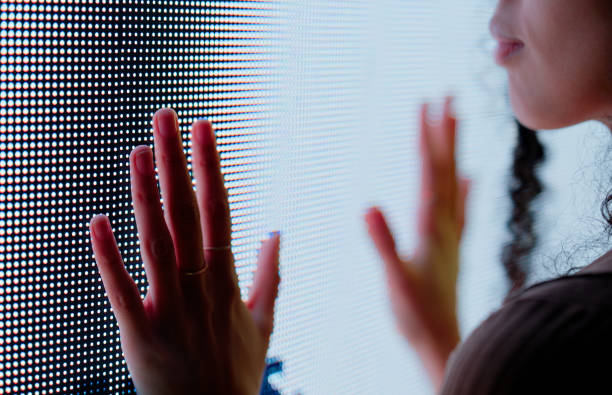
Sensor Integration for Real-Time Interaction
Beyond touch, sensor integration enhances interactivity. Motion sensors, proximity detectors, and ambient light sensors adjust content in response to user behavior.
Motion sensing enables adaptive display content, triggering animations or informational overlays as viewers approach. Proximity detection allows the screen to respond differently depending on distance, personalizing the experience. Ambient light sensors optimize brightness and contrast, ensuring visual consistency under varying environmental conditions.
Combining sensor data with touch capability allows real-time feedback loops. Displays respond dynamically, creating immersive experiences that surpass static digital signage solutions.
Real-Time Content Management
Interactive micro pitch LED displays rely on robust content management systems. These systems process input from touch and sensors while delivering real-time visuals.
High-speed processors synchronize data streams to prevent lag or latency. Network connectivity enables cloud-based content updates, allowing remote management. Users can customize displays in real time, adjusting visuals, messaging, or interactive features to match audience needs.
Real-time capabilities also support analytics. Interactive displays collect engagement metrics, helping organizations refine content strategies and optimize user interaction.
Applications in Commercial and Public Spaces
Retail environments benefit from interactive micro pitch LED displays. They provide product information, promotional content, and personalized recommendations in-store.
Corporate offices use these displays for presentations, collaborative work, and data visualization. Interactive screens enhance meetings by allowing multiple participants to manipulate content simultaneously.
Museums and educational institutions deploy touch-enabled displays to create immersive learning experiences. Real-time content ensures updates reflect current exhibits, enhancing visitor engagement.
Entertainment venues and event spaces use micro pitch LED displays for interactive stage backdrops, gaming zones, and audience participation tools. High pixel density ensures visual clarity even when audiences are close to the screen.

Design Considerations for Optimal Performance
Proper design ensures reliable interactivity and visual performance. Cabinet structure, LED placement, and cooling systems affect display longevity. Modular design enables easy maintenance and scalability. Panels can be replaced or reconfigured without affecting the entire display. This approach minimizes downtime and reduces operational costs.
Cooling solutions prevent overheating, maintaining uniform brightness and consistent color accuracy. High-density micro pitch LEDs generate heat, making thermal management essential for continuous operation.
Electrical and signal integrity are critical. High-speed data transmission ensures smooth visuals and rapid touch response. Power supply design supports consistent performance under varying load conditions.
Enhancing User Experience
Interactive micro pitch LED displays prioritize seamless engagement. Low-latency touch, responsive sensors, and high-resolution visuals create intuitive experiences.
User interface design complements hardware capabilities. Optimized gestures, clear visual cues, and responsive feedback enhance usability. Dynamic animations and real-time updates reinforce interaction, making the display more compelling.
Audio integration further enriches the experience. Synchronizing sound with visual and tactile feedback creates multi-sensory engagement. These elements are crucial in environments like exhibitions or interactive advertising campaigns.
Maintenance and Reliability
High-density interactive displays require consistent maintenance. Dust, humidity, and mechanical stress can impact LED performance and touch responsiveness. Routine calibration ensures color uniformity and precise touch sensitivity. Sensor functionality must be tested regularly to maintain reliable real-time responses.
Modular designs simplify repairs. Individual panels or sensor modules can be replaced without a full system shutdown, minimizing operational interruptions. Durability and consistent performance are essential in high-traffic or 24/7 operation environments. Displays must maintain resolution, touch accuracy, and sensor reliability throughout their lifecycle.
Integration with IoT and Smart Systems
Interactive micro pitch LED displays are increasingly integrated with IoT ecosystems. Sensor data can communicate with building management systems, marketing platforms, or automation tools.
This connectivity allows personalized content delivery, energy optimization, and advanced analytics. Real-time user behavior analysis informs adaptive content strategies. For example, retail stores can adjust promotions based on traffic patterns or dwell time. Educational environments can tailor content to student interactions. Such integration maximizes the value of interactive LED technology.
Advancements in Pixel Density and Display Technology
Continuous improvement in LED technology expands micro-pitch potential. Smaller pixel spacing increases resolution while maintaining brightness. HDR (High Dynamic Range) and wide color gamut support richer visuals. OLED hybrid solutions and mini-LED integration improve contrast and energy efficiency.
These advancements, combined with touch and sensor integration, create displays that rival traditional screens while offering immersive, interactive capabilities.

Energy Efficiency and Sustainability
Energy efficiency remains a priority. Micro pitch LEDs consume less power per pixel while delivering high brightness. Sensor-driven adaptive brightness further reduces energy usage. Sustainable materials and long lifespan LEDs minimize replacement needs. Modular construction reduces material waste during maintenance. Sustainability aligns with corporate responsibility initiatives, enhancing brand image while reducing operational costs.
Summary: Strategic Value of Interactive Micro Pitch LED Displays
Interactive micro pitch LED displays transform digital engagement. Their high-resolution visuals, touch interactivity, and sensor integration create immersive, responsive experiences. Real-time content management and IoT integration enable adaptive, personalized interactions. Applications span retail, corporate, educational, entertainment, and public sectors. Design optimization, thermal management, and modular architecture ensure reliability and longevity. Energy efficiency and sustainability enhance operational value.
Ultimately, interactive micro pitch LED displays redefine audience engagement. They merge technology, aesthetics, and interactivity, enabling organizations to communicate dynamically and measure impact. These displays represent a convergence of visual performance, user experience, and intelligent integration.
