


High-decibel environments pose unique challenges for visual technology. Concerts, Stadien, industrial sites, and event arenas subject LED displays to intense vibrations and sudden shocks. Standard displays may suffer pixel displacement, structural fatigue, or reduced lifespan. Shockproof LED displays provide a reliable solution, designed to withstand high-intensity sound waves while maintaining visual performance. These displays combine structural engineering, advanced materials, and modular design to ensure stability under stress.
Understanding Shockproof LED Display Design
The foundation of shockproof performance lies in the display’s structural integrity. Panels must absorb vibration without transferring force to sensitive components. Engineers achieve this using reinforced frames, anti-vibration mounts, and flexible module connections. Shockproof designs often incorporate cushioned brackets and internal damping systems. Each module acts independently to reduce stress concentration, while the overall assembly maintains a continuous visual surface. This combination protects LEDs, PCBs, and connectors from mechanical damage.
Modular construction enhances shockproof capabilities. Each module can be mounted and aligned with precision. Modules connect via reinforced latches, allowing slight movement to absorb vibrations. This reduces strain on solder joints and PCB traces. In large-scale installations, modularity ensures that a localized shock does not affect the entire display, maintaining operational continuity even in high-decibel settings.
Materials That Resist Shock and Vibration
Material selection plays a crucial role in shockproof LED displays. Frames use high-strength aluminum or steel alloys that resist bending. Flexible polymers absorb energy and prevent deformation of internal components. Encapsulation compounds for LEDs combine elasticity with optical clarity, protecting chips from microfractures. Reinforced corner structures prevent cracking at module boundaries, while damping layers reduce transmission of sound-induced vibrations. Together, these materials maintain both physical stability and image integrity under extreme conditions.
The PCB itself also benefits from material improvements. Flexible copper traces reduce the risk of breakage during vibration. Substrates with enhanced mechanical tolerance distribute stress evenly across the module. These innovations ensure that displays can operate reliably in environments where traditional screens might fail. Thermal-resistant coatings protect components during extended exposure to both heat and vibration, enhancing overall durability.
Anti-Vibration Mounting Systems
Mounting systems significantly influence shockproof performance. Fixed rigid mounts transmit vibrations, which may damage LEDs or misalign pixels. Modern shockproof LED displays use adjustable, cushioned mounts that isolate modules from external forces. Springs, dampers, and elastic joints convert mechanical energy into heat or harmless movement, preventing structural stress. These systems support a wide range of installation angles, from vertical walls to overhead setups, ensuring safety without compromising visual output.
Außerdem, modular mounting allows easy maintenance. Technicians can access individual modules without disassembling the entire screen. This feature is particularly valuable in high-decibel venues where rapid servicing may be required. Modular isolation reduces downtime and preserves image quality over time.
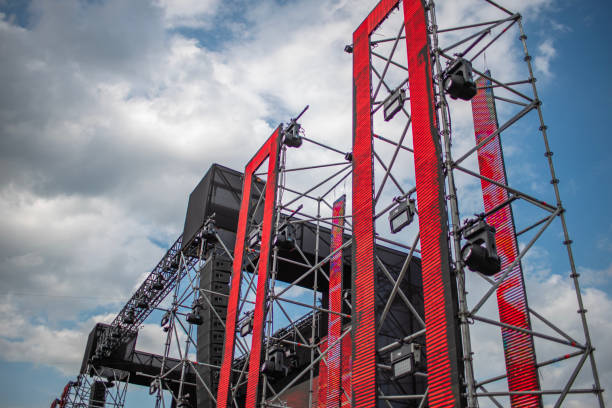
Music festival equipment and staging
Maintaining Visual Performance Under Stress
Shockproof design does not compromise visual performance. LEDs are selected for high brightness and wide viewing angles to counter visual distortion caused by vibrations. Flexible optical lenses maintain consistent color uniformity even when modules experience minor movement. Integrated calibration systems adjust for misalignment, ensuring sharp images at all times. Frame-level precision combined with LED quality ensures that audiences enjoy uninterrupted, high-definition content despite environmental challenges.
High refresh rates and grayscale stability are critical. In concert or stadium environments, low-frequency vibrations could otherwise cause flicker or color instability. Shockproof displays integrate driver circuits capable of regulating current flow under mechanical stress. This ensures smooth motion, reliable contrast, and vivid color reproduction in dynamic scenes.
Thermal and Environmental Considerations
High-decibel environments often generate additional heat from lighting, crowds, or machinery. Shockproof LED displays incorporate thermal management systems, including heat sinks, airflow channels, and conductive adhesives. These systems maintain uniform temperature across the display, preventing hot spots that can weaken LEDs or distort images. Moisture and dust resistance further enhance longevity, especially in outdoor or industrial installations.
Combined with vibration resistance, thermal stability ensures that displays maintain performance even under harsh operating conditions. This multi-layer protection increases product lifespan and reduces maintenance costs.
Anwendungen in Branchen
Shockproof LED displays serve multiple industries. In entertainment, they provide reliable visuals at concerts, Theater, und Stadien. Industrial facilities use them for monitoring and control screens in environments with heavy machinery. Event organizers deploy them for temporary exhibitions where setup and teardown introduce vibrations. Retail spaces near transportation hubs benefit from durable displays that withstand noise and movement. Each application demonstrates how shockproof design extends operational reliability and protects investment.
The displays also enhance safety. Stabil, well-mounted modules reduce the risk of falling components or electrical hazards. Reliable content delivery ensures that safety alerts, Live-Feeds, and advertisements remain uninterrupted, which is critical in public venues.
Engineering Challenges and Solutions
Designing shockproof LED displays involves overcoming several technical challenges. Vibrations may stress solder joints, connectors, and flexible circuits. Engineers mitigate these risks with reinforced designs, shock-absorbing mounts, and flexible interconnects. Power distribution circuits incorporate redundancy to prevent voltage drops during mechanical stress. Optical systems use calibrated lenses to maintain image quality. Advanced simulation and testing validate performance before deployment, ensuring displays function flawlessly in real-world high-decibel conditions.
Future Trends in Shockproof LED Technology
The demand for shockproof LED displays will grow as venues become larger, and audiences expect higher visual fidelity. Innovations include lighter materials, improved modular interconnects, and more effective damping systems. Flexible displays may combine shockproof features with curved or irregular designs for immersive experiences. Smart monitoring systems could detect vibrations in real time and adjust performance dynamically, enhancing both safety and visual output.
Sustainability also drives development. Durable, shock-resistant components extend product life, reducing electronic waste. Modular design allows incremental upgrades without full replacement, preserving investment and minimizing environmental impact. Energy-efficient LEDs reduce heat generation, complementing shockproof systems while lowering operating costs.
Abschluss: Protecting Displays in High-Decibel Environments
Shockproof LED displays redefine how screens withstand extreme environments. Structural reinforcement, vibration-absorbing mounts, advanced materials, and modular engineering work together to maintain stability and performance. These displays preserve image quality, enhance safety, and increase lifespan across entertainment, industrial, Einzelhandel, and event applications. Combining optical precision, Wärmemanagement, and mechanical resilience ensures reliability even under intense sound and vibration. For modern venues and demanding installations, shockproof LED technology delivers durability without compromising visual excellence.
