Ya sea como telón de fondo en un estudio de transmisión en vivo, La exhibición publicitaria en un centro comercial., o el enorme videowall de un concierto: esas deslumbrantes pantallas LED a todo color comparten un secreto: ellos corren en el Sistema de color primario RGB. Sí, así es, cada tono vibrante, cada gradiente suave, cada tono de piel real que ves en una pantalla LED a todo color? Todo se reduce a tres pequeños LED: rojo (R), verde (GRAMO), y azul (B) trabajando en perfecta armonía. Hoy, Estoy desglosando esto como si se lo explicara a un cliente: simple, sin jerga, justo lo que realmente necesitas saber.
I. Los "bloques de construcción de color" de las pantallas LED a todo color: Los colores primarios RGB son clave
El núcleo de una pantalla LED a todo color es mucho más simple de lo que piensas: recuerda esos bloques de construcción de colores con los que jugabas cuando eras niño.. Cada pequeño "píxel" (la unidad emisora de luz más pequeña en la pantalla) está hecho de tres chips LED: Rojo (R), Verde (GRAMO), y Azul (B). Estos tres son lo que llamamos “colores primarios RGB” en la industria., y ellos son los base de cada color que la pantalla puede crear. Aquí está la cosa: cada sombra que ves no es mágica. Son solo estos tres LED jugando un "juego de brillo": atenúa uno un poco, poner en marcha otro, ajustar la proporción, y boom: nuevo color. Fácil, bien?
II. Rojo, Verde, y los LED azules tienen cada uno "superpoderes únicos": no puedes saltarte ninguno
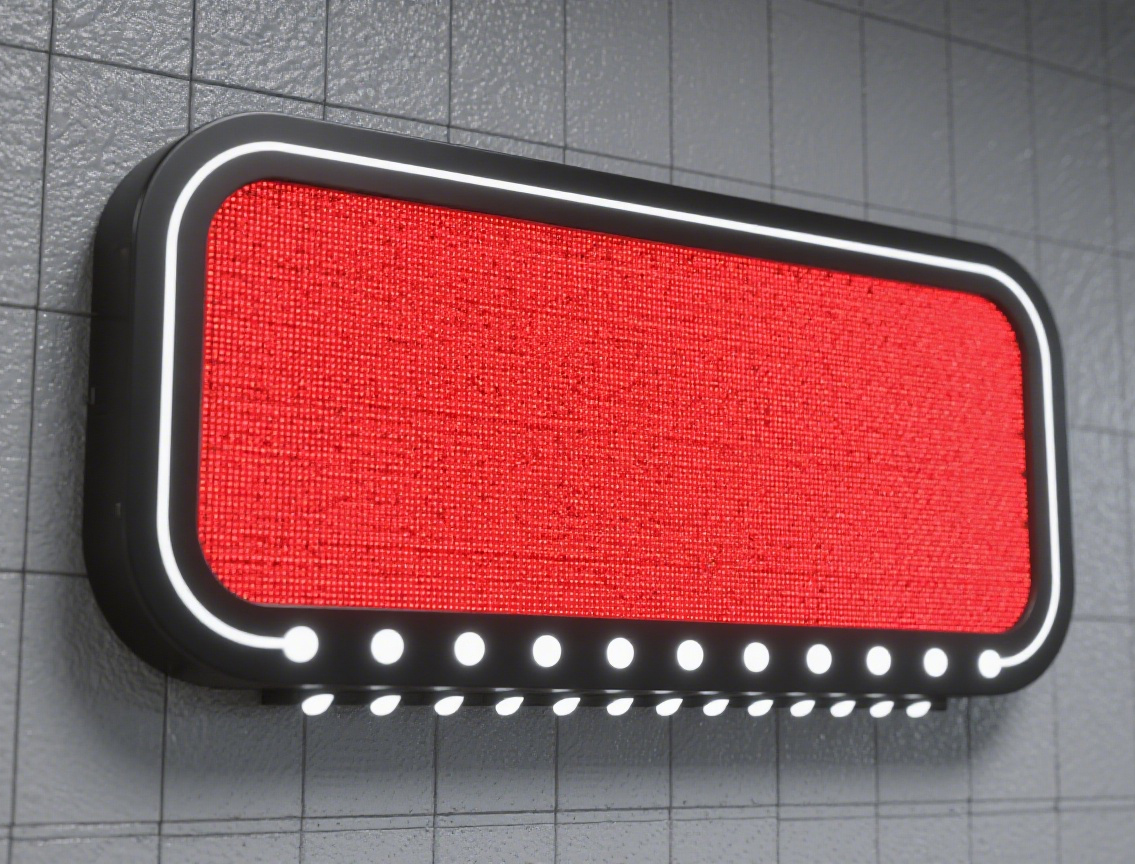
Letrero LED rojo con marco negro y luces decorativas blancas montadas en una pared de azulejos
Para obtener millones de colores, cada LED RGB necesita hacer su trabajo perfectamente. Analicemos sus “superpoderes”:
1. LED rojo: La “estrella vibrante” con la longitud de onda más larga
Los LED rojos emiten luz roja con longitudes de onda de 620 a 750 nanómetros (ese es el más largo de los tres). Su superpoder? ellos son imposible perderse. Piensa en manzanas maduras, linternas rojas festivas, o esas llamativas “etiquetas de venta rojas” en transmisiones en vivo: todos los LED rojos hacen lo suyo. Por eso los colores llamativos resaltan tanto en las pantallas LED.
2. LED verde: El “Embajador de la frescura” con longitud de onda media
Los LED verdes emiten luz con longitudes de onda entre 495 y 570 nanómetros (longitud media). Su talento? hacer sentir las cosas fresco. Hojas de primavera recién brotando, hierba en la pradera, los "fondos de productos verdes" en las transmisiones en vivo, todos dependen de LED verdes para recrear ese "vibrante, sentirse vivo”.
3. LED azul: El “representante de la pureza” con la longitud de onda más corta
Los LED azules emiten luz azul con la longitud de onda más corta (450–495 nanómetros). Su ventaja? Transmitir pureza. Cielos despejados, azules profundos del océano, "Blues corporativo" inspirado en la tecnología: los LED azules son la razón por la que esos colores se ven tan nítidos y limpios.
III. ¿Cómo “colaboran” los colores primarios RGB?? Ajustar el brillo y las proporciones es suficiente
Los clientes me preguntan esto todo el tiempo.: “¿Cómo es posible que tres colores produzcan millones de matices??"Todo se reduce a dos claves simples—sin matemáticas sofisticadas, solo sentido común:
pantalla LED
Ajustar el brillo: Cada LED se puede atenuar (0%) o al máximo (100%)—y todo lo demás (piensa en una escala de 0 a 255, como un dial de volumen para la luz).
Control ratios: Mezcle los tres LED en diferentes proporciones, como un barman preparando un cóctel.!
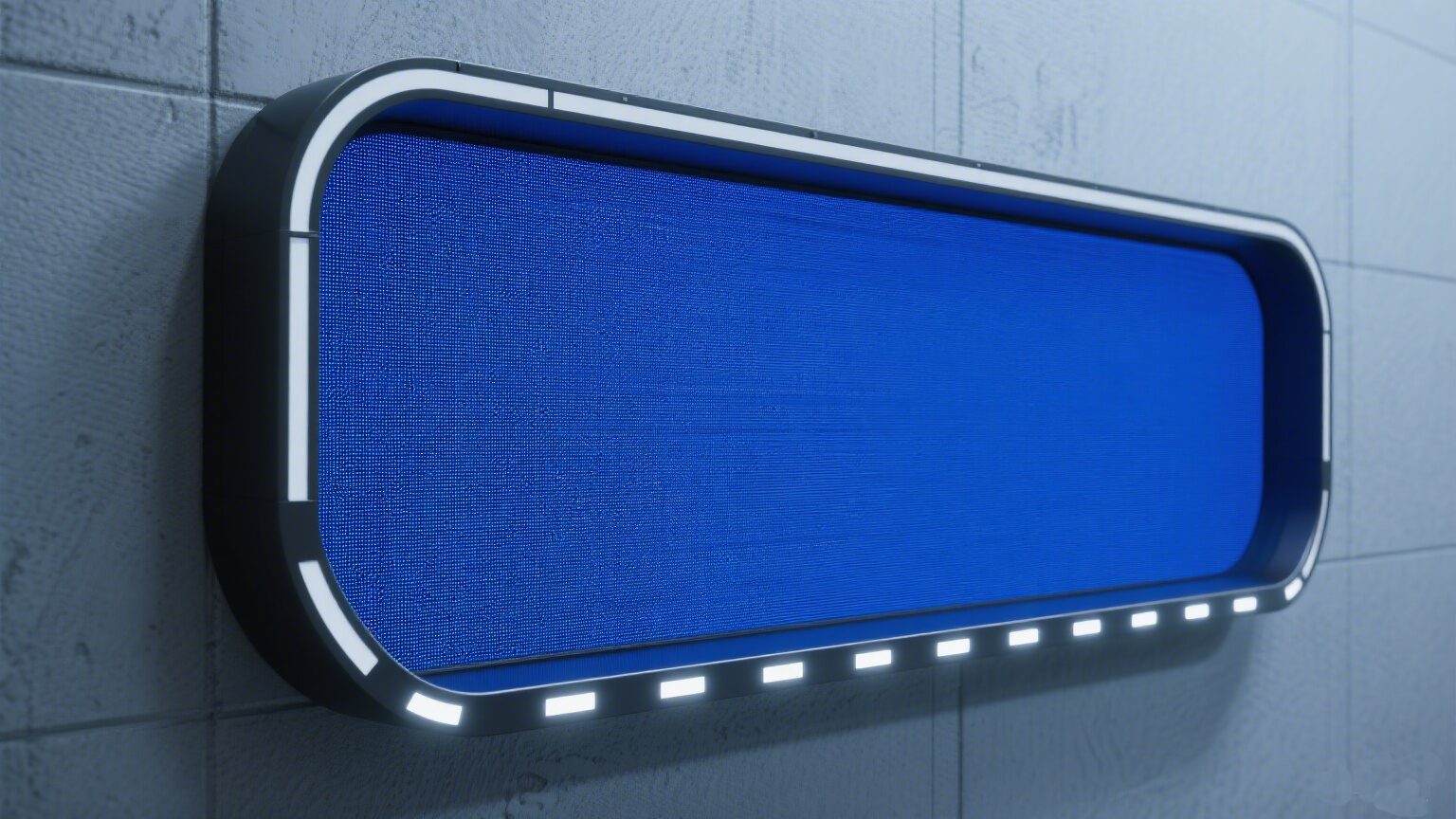
Pantalla LED azul con marco negro y luces decorativas blancas montadas sobre hormigón – pared texturizada
Usemos ejemplos del mundo real para que esto funcione.:
Rojo + Verde en 80% brillo → amarillo (como un plátano).
Rojo + Azul en 50% cada uno → púrpura (como uvas).
Verde + Azul en 70% → cian (como agua de lago).
Los tres en 100% → blanco (como una lámpara fluorescente).
Los tres en 0% → negro (como una pantalla apagada).
Aquí está la gran conclusión: Ajustando el brillo y las proporciones precisamente, Las pantallas LED a todo color pueden recrear casi todos los colores del espectro visible. Por eso los livestreamers se parecen a ellos mismos, y los anuncios de los centros comerciales muestran productos en sus colores reales, sin desorden descolorido, simplemente puro, tonos vivos.
IV. Punto clave! No confunda "aditivo" con. Mezcla de colores “sustractiva”
Este es un enorme trampa en la que veo caer a la gente, así que escuchen: Usos RGB mezcla de colores aditivos-luz suma para hacer colores más brillantes (rojo + verde + azul = blanco). Usos de impresión/pintura mezcla de colores sustractiva—pigmentos absorber luz (la pintura amarilla absorbe el azul, dejando rojo + verde para reflejar, entonces se ve amarillo).
recuerda esto! Esta es la razón por la que las pantallas LED son mucho más vibrantes que los carteles impresos: "añaden" luz, no te lo quites. Ya no tendrás que preguntarte por qué tu anuncio exterior aparece a la luz del sol: este es el secreto.
V. Resumen: La “magia del color” de las pantallas LED es toda RGB
Al final del dia, Las pantallas LED a todo color no tienen trucos sofisticados. Su capacidad para mostrar millones de colores se reduce a una cosa: la perfecta colaboración de los colores primarios RGB. Desde demostraciones de productos en vivo hasta vallas publicitarias al aire libre, desde escenarios de conciertos hasta videos de marcas de centros comerciales: cada color que ves es simplemente rojo, verde, y LED azules haciendo su trabajo.
La próxima vez que pases por una pantalla LED, tómate un segundo para mirar de cerca. Cada pequeño píxel brillante? Son tres pequeños LED. apresurarse para que el color sea perfecto. Fresco, bien?
Tabla de contenido (Compatible con el complemento “Tabla de contenido” de WordPress)
¿Por qué las pantallas LED a todo color pueden mostrar millones de colores??
I. Los "bloques de construcción de color" de las pantallas LED a todo color: Los colores primarios RGB son clave
II. Rojo, Verde, y los LED azules tienen cada uno "superpoderes únicos": no puedes saltarte ninguno
LED rojo: La “estrella vibrante” con la longitud de onda más larga
LED verde: El “Embajador de la frescura” con longitud de onda media
LED azul: El “representante de la pureza” con la longitud de onda más corta
III. ¿Cómo “colaboran” los colores primarios RGB?? Ajustar el brillo y las proporciones es suficiente
IV. Punto clave! No confunda "aditivo" con. Mezcla de colores “sustractiva”
V. Resumen: La “magia del color” de las pantallas LED es toda RGB