Comment choisir le bon écran de location LED? 4-Guide pour éviter les pièges des étapes (À lire absolument pour les planificateurs de scènes et d'événements)
Écrans LED en location sont les “coeur visuel” of stage performances and cultural events—whether it’s a concert, un lancement de produit, or a festival, leright LED rental screencan make your event stand out, while the wrong one might leave audiences squinting or complaining about blurry visuals. As a stage planner or rental company, picking the perfect LED rental screen isn’t just about price—it’s about matching the screen to your event’s needs to avoid common pitfalls like wrong scene selection or overlooking the control system. Aujourd'hui, I’ll walk you through a 4-step guide to choose the right LED rental screen and save you from costly mistakes!
Étape 1: Define Your LED Rental Screen’s “Primary Use Case” (Le #1 Pitfall Most People Fall Into!)
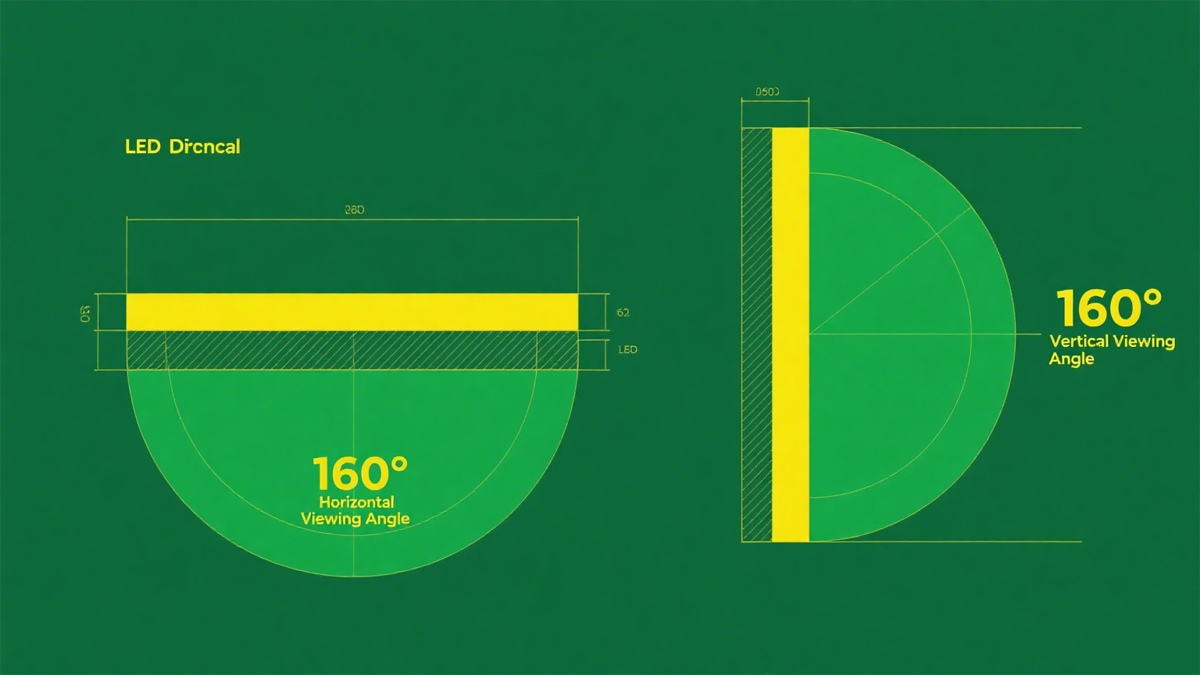
Diagram showing LED display’s 160° horizontal and vertical viewing angles with technical schematic.
The golden rule of LED rental screens? The venue dictates the screen type—don’t buy an outdoor screen for indoor use (it’ll glare) or an indoor screen for outdoor use (it’ll fail). Let’s break down the 3 most common scenarios:
Outdoor Scenarios: Go for High-Brightness + Waterproof Screens!
Écrans d’affichage de réunion avec des exigences d’angle de vision spécifiques
Outdoor events are tough on screens—sunlight, pluie, wind—you name it. The P3.91 model is a go-to for outdoor events: it has enough brightness to cut through direct sunlight (so audiences can see clearly) and a high waterproof rating (no short circuits if it rains).
Voici un conseil de pro: Don’t even think about using an indoor screen outdoors—sunlight will “blind” il (you’ll see nothing but glare), and rain will cause instant short circuits. I’ve seen this ruin too many events—save yourself the trouble!
Indoor Scenarios: Forget Brightness—Small Pixel Pitch Is King!
Indoor events are all aboutimage detail. Take the P2.604: its pixel pitch is so small that viewers standing just 3 meters away won’t see any graininess. And it’s affordable—why it’s a favorite for indoor concerts and corporate events.
Souviens-toi de ça: Indoor screens aren’t about how bright they are—they’re about how sharp the image is. Don’t get tricked into buying a high-brightness indoor screen—all it’ll do is hurt people’s eyes!
Cross-Scenario (De plein air + Intérieur): Pick Versatile Outdoor Screens!
If your event moves from outdoor to indoor (like a festival that goes into the evening), get a screen withwaterproof gaskets + adjustable brightness. Models with 500mm×500mm or 500mm×1000mm cabinets work best: they’re waterproof for the day and dimmable for the night.
No more buying a screen that sits in storage after one use—this one adapts toanyevent!
Étape 2: The Control System Is the “Brain” of Your LED Rental Screen—Don’t Ignore It!
Most people fixate on brightness or pixel pitch and forget the control system—but it’s what makes your screenwork. Imagine this: You’re running a concert, and the stage screen lags behind the music, or three screens show different images—that’s 尴尬 (embarrassing) for everyone.
Here are thecore checkpointsto save you from signal disasters (remember these!):
Does it supportmulti-screen synchronization? (par ex., three stage screens showing the same image with zero delay—non-negotiable for big events!)
Does it havecustom interfaces? (Make sure it works with your cameras, mixers, or set-top boxes—most signal issues come from incompatible ports!)
Est-ce easy to operate? (Events are chaotic—you don’t have 30 minutes to learn a complicated system. Look for “one-click launch” et “one-click switching”!)
And a must-ask for vendors: “Do you include a matching LED video processor?»That’s the core of the control system—asking this upfront fixes 90% of on-site problems!
Rental screens are all abouttemporary use—you install them, use them, take them down, and move them. If your screen cabinets are heavy as rocks (like old steel ones), you’ll need 4 people to lift one and 2 hours to install—doubling your labor costs!
The solution? Die-cast aluminum cabinets—here’s why they’re a game-changer:
Why Die-Cast Aluminum Cabinets?
Models with 500mm×500mm or 500mm×1000mm sizes are perfect:
Léger: One person can carry them (no more team lifts!).
Easy to install: Snap them together like building blocks—no screws, no tools.
Fast to dismantle: Takes 1 minute per cabinet (save time on teardown!).
Versatile: They can do curved screens, right angles, or seamless 拼接 (épissage) to fit any stage layout.
And don’t chase oversized modules—bigger isn’t better. The 500-series modules are compact for transport and work forany scénographie. Trust me, this will save you so much time!
A lot of people think, “It’s a rental screen—who cares about lifespan?»But let me tell you: Poor environmental protection can ruin a screen in 3 uses. LEDS, control boards, and power supplies hate heat, humidité, and dust—here’s what to watch for:
1. Heat (Summer’s Silent Killer)
Stage lights + summer sun = scorching temperatures. If your screen doesn’t have ventilation holes or heat-conductive aluminum plates, the power supply will burn out, and LEDs will die. This is a big one—don’t skip it!
2. Water (Rain = Instant Blackouts)
Outdoor events need at least anNote imperméable IP65. Even a light drizzle can seep into the screen and cause short circuits. I’ve seen this happen at a festival—half the screen went black mid-performance. Don’t let that be you!
3. Poussière (Clogs = Slow Death)
Dusty environments (like construction-themed events or outdoor festivals) clog ventilation holes. Get a screen with adust cover—it’ll keep dirt out and extend your screen’s life.
Final Summary: The Core Logic for Choosing LED Rental Screens
Choosing the right LED rental screen isn’t rocket science—just remember these 4 steps:
Match the screen to your scenario (outdoor/indoor/mixed).
Check the control system (it’s the brain—don’t skimp!).
Pick die-cast aluminum cabinets (save time and labor).
Protect against the environment (chaleur, eau, dust = screen killers).
Do this, and you’ll get a screen that’s crisp, easy to set up, and glitch-free. That’s the real value of a good LED rental screen: maximizing your event’s impactalors quesaving money on replacements.
And if you follow these steps? You’ll avoid 99% of the pitfalls I’ve seen over the years—happy planning!