Hai mai visto questi "poster digitali" nei centri commerciali, negozi di tè con bolle, o edifici per uffici? Loro sono 10 times brighter than traditional paper posters, play animations and promotional videos, and even show real-time food delivery orders—that’s theSchermo LED per affissioni.
But did you know? A 1-meter-wideSchermo LED per affissionican cost 3,000 yuan O 10,000 yuan. What’s the difference?
Oggi, an insider breaks down the 8 “price-influencing factors” ofSchermi LED per affissionito help you avoid overpaying or buying the wrong one!
UN Schermo LED per affissioniis a digital display made from LED light beads. Unlike static paper posters, it showsdynamic content—pictures, video, dati in tempo reale (tempo atmosferico, inventory), and lets you update content remotely (no more climbing ladders to paste posters!).
Its biggest advantages:
Eye-catching: Dynamic visuals get 3x more attention than static posters.
Flessibile: Swap promotions in 10 minutes—no printing delays.
Long-lasting: Lasts 5–10 years (way cheaper than reprinting paper posters).
Ii. 8 Factors That Influence LED Poster Screen Prices
The price gap between cheap and expensiveSchermi LED per affissionicomes down to these 8 details:
1. Pixel pitch: Clarity = Cost
Passo dei pixel (distance between LED beads, PER ESEMPIO., P2.5 = 2.5mm) determines how clear your screen is. Smaller pitch = denser LEDs = sharper images = higher cost.
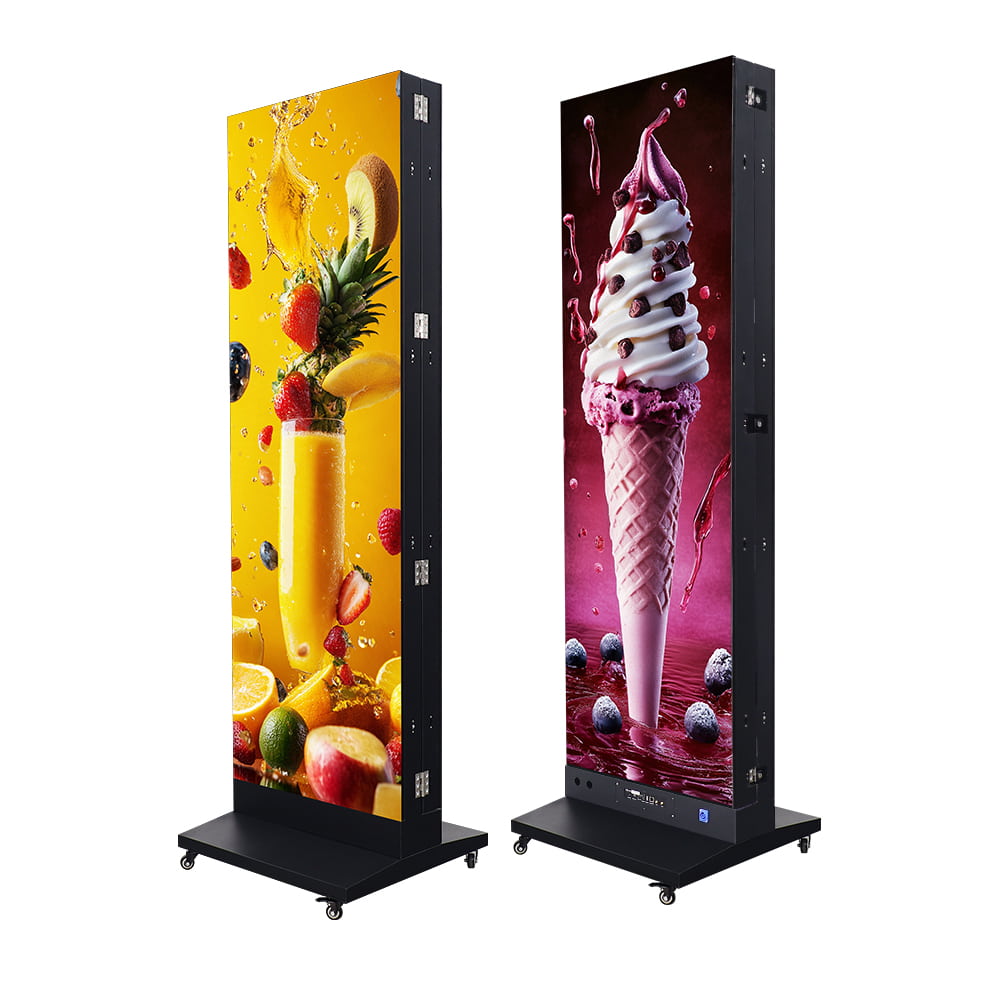
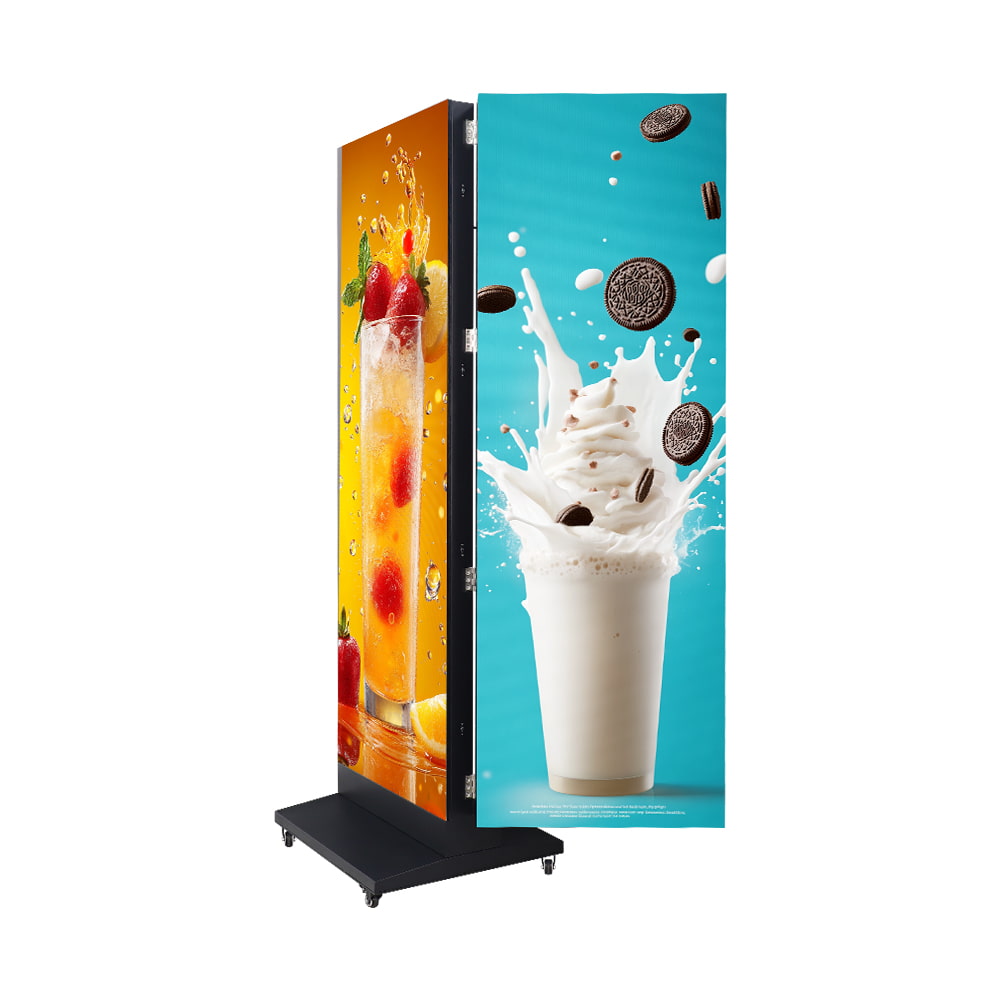
A poster LED screen displaying advertisements for the cold beverage industry
An LED display screen showcasing an ice cream advertisement
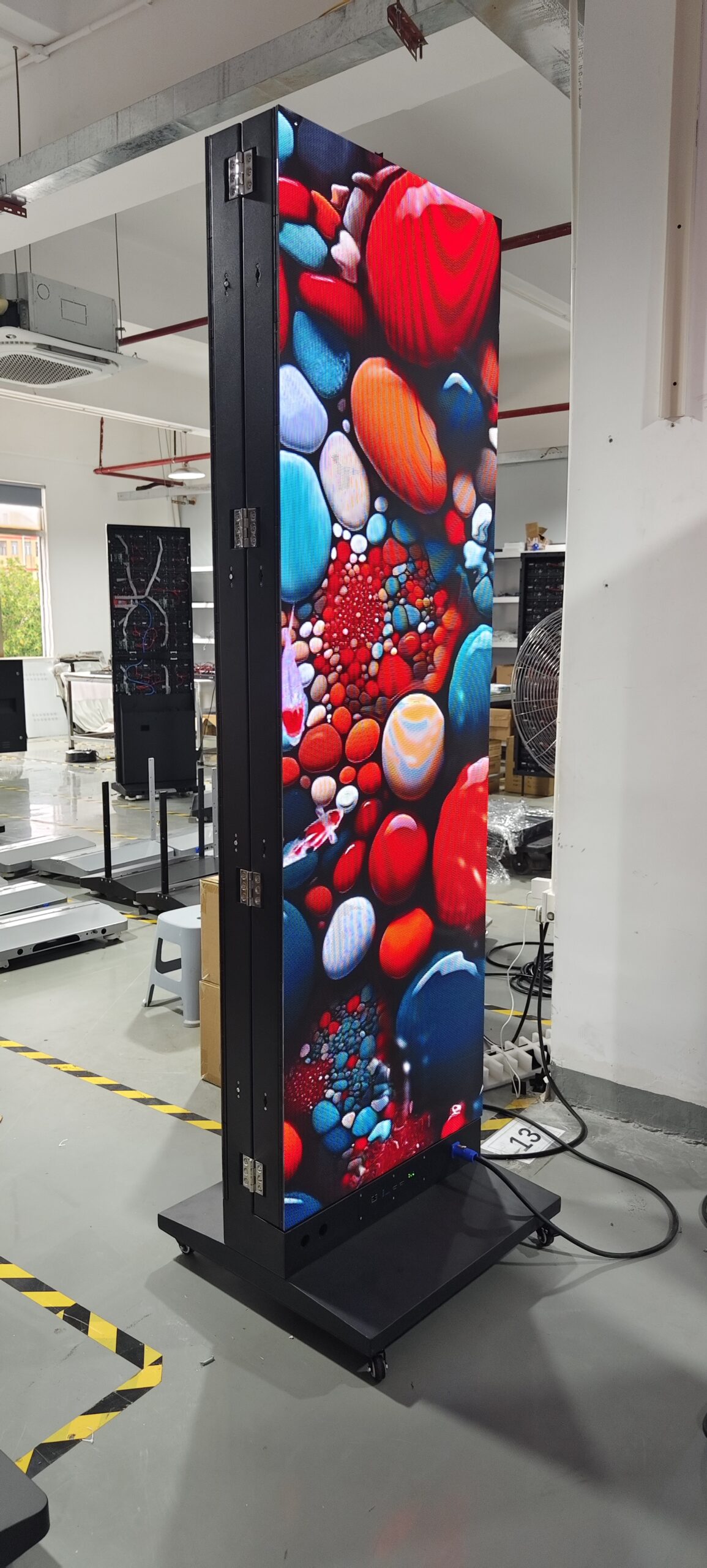
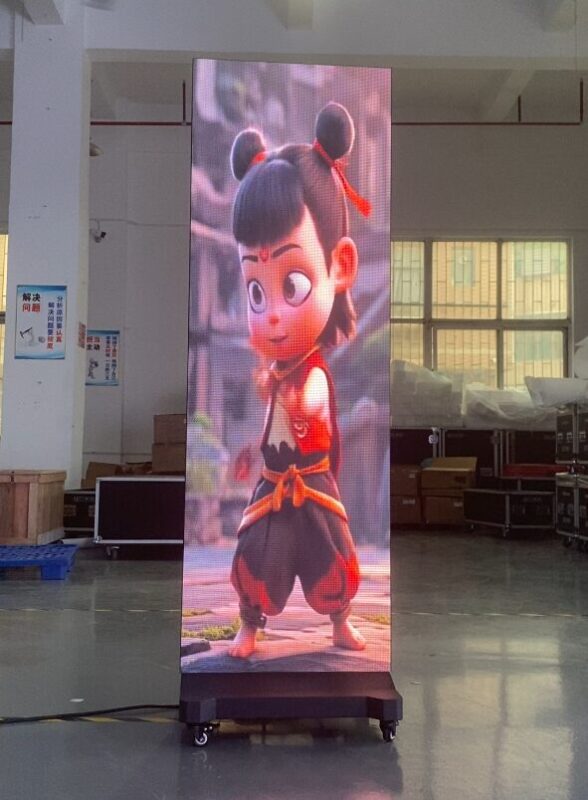
A poster LED display undergoing testing in a factory production workshop
P4–P5: Good formedium viewing (PER ESEMPIO., mall entrances, 3–5 meters). Clear but not ultra-detailed. Price: ~4,000–6,000 RMB/sqm.
P6–P8: Per long viewing (PER ESEMPIO., outdoor plazas, 10 metri). Legible for large text. Price: ~2,000–3,000 RMB/sqm.
Esempio: A 1m × 0.5m screen costs 4,000–6,000 RMB for P2.5 but only 2,000–3,000 RMB for P5. The extra money buys “clarity” you’ll only notice if you’re close.
2. Size: Match It to Viewing Distance (Don’t Buy Too Big!)
Schermo LED per affissionisize isn’t about “bigger is better”—it’s about “fitting where viewers stand”:
Small (0.4×0.6m): Cash registers, close viewing (1 meter). Price: ~1,500–3,000 RMB.
Medio (1×0.5m): Mall aisles, medium viewing (3–5 meters). Price: ~3,000–6,000 RMB.
Large (2×1m): Outdoor plazas, long viewing (10 metri). Price: ~8,000–15,000 RMB.
Nota: A 2-meter screen at a cash register is overkill—it’ll be too glaring for customers standing 1 meter away!
3. Luminosità: Indoor vs. Outdoor Needs 3x More Nits
Luminosità (misurato dentro NITS) is how well your screen fights light. More nits = more visible = higher cost:
Al coperto: 500–1,000 nits (tea shops, uffici). Cheap—no need to fight sunlight.
All'aperto: 3,000–5,000 nits (centri commerciali, plazas). Must resist direct sunlight—so pricier.
Pitfall: Using an indoor screen outdoors? It’ll look “blacked out” in the sun. You’ll end up paying double to replace it with an outdoor model.
4. Indoor vs. Outdoor Design: Waterproofing Doubles the Price
Al coperto schermi: No waterproofing, plastic/thin aluminum frames. Cheap. All'aperto schermi: IP65 impermeabile (resiste alla pioggia), polvere, thick steel/aluminum frames. Costs 50%–100% more than indoor models.
Rule: Never use indoor screens outdoors—water will burn out LEDs. Repairs cost more than buying a new outdoor screen!
5. Caratteristiche: Animation vs. Interactivity = Price Jump
BasicSchermi LED per affissionionly play videos. Add features, and the price goes up:
Touchscreen: Let customers tap to order (PER ESEMPIO., 奶茶 shops). +20%–30% cost.
Real-time data: Connect to ERP (inventory) or weather APIs. +30%–50% cost.
Elevata frequenza di aggiornamento: Smooth videos (3840Hz vs. 1920Hz). +15%–25% cost.
Esempio: A basic 1m screen costs 3,000 RMB. A touchscreen? 4,000 RMB. A real-time data screen? 4,500 RMB.
6. Brand & Qualità: Cheap = Short Lifespan
Top brands (PER ESEMPIO., Xvisive) usequality components:
Imported LED chips (Samsung, Epistar).
High-temperature IC drivers (no overheating).
100,000-hour lifespan (8 hours/day = 34 anni!).
2-year on-site warranty.
Price: ~6,000–12,000 RMB/sqm.
Small brands/white labels:
Cheap domestic chips.
50,000-hour lifespan (8 hours/day = 17 anni).
Self-shipping for repairs (no on-site help).
Price: ~2,000–4,000 RMB/sqm.
Math: A top brand screen lasts twice as long as a cheap one. It’s cheaperlong-term.
7. Materiali: Frames & LEDs Hide Costs
Hardware adds up faster than you think:
Frames: Acciaio (~200 RMB/sqm) is cheap but heavy. Alluminio (~400 RMB/sqm) is light and rust-proof. Magnesium alloy (~800 RMB/sqm) is ultra-light but expensive.
Last Word: UN Schermo LED per affissioni’s price is the sum ofclarity, features, and durability. Choose right, and it’ll be a “customer magnet” for years. Choose wrong, and it’ll be a space-wasting paperweight.
Next time you shop, ask: “What problem do I need this screen to solve?”—the answer will save you money!
Hai mai ammirato quelli vividi, schermi giganti nei centri commerciali che possono essere liberamente combinati e suddivisi? Hai mai desiderato un ciao...
Gli schermi poster LED occasionalmente riscontrano problemi come errori di rilevamento del dispositivo, immagini distorte, o contenuti sfocati durante la riproduzione multimediale..