


In modern event production, the visual centerpiece can make or break audience perception. Tradizionalmente, event organizers have focused on resolution and size when evaluating LED screens. Tuttavia, as competition for attention grows, it is no longer enough for screens to serve as static background panels. To truly enhance stage impact, indoor event LED displays must embody creativity, responsiveness, and immersive capabilities.
This article explores how advanced LED display technologies—such as asymmetric configurations, high refresh rates, and HDR—transform stages from simple backdrops into “thinking” storytelling spaces. By examining technical possibilities, design strategies, and practical applications, we illustrate how LED screens can justify increased budgets and generate disproportionate value in audience engagement, media coverage, and brand perception.
Beyond Resolution: The Real Drivers of Stage Immersion
Resolution alone does not define event quality. While pixel density affects clarity, it cannot compensate for weak creative integration or technical limitations during live production.
High-end indoor event LED displays achieve immersive experiences through a combination of three key factors:
-
Creative Form Factor – Screens that break traditional rectangular boundaries offer new narrative possibilities.
-
High Refresh Rates – Critical for avoiding motion blur and scan lines in high-speed photography or live streaming.
-
Gamma dinamica elevata (HDR) – Ensures vibrant color reproduction and deep contrast, enhancing visual depth and emotional impact.
By focusing on these dimensions, event organizers can elevate the perceived quality of productions, delivering experiences that resonate both live and digitally.
Creative Form Factor: Shaping the Narrative
Traditional flat LED panels limit creative expression. Asymmetric, curvo, or irregular screen configurations allow designers to integrate displays seamlessly with stage architecture, props, and performers.
Asymmetric and Multi-Segment Configurations
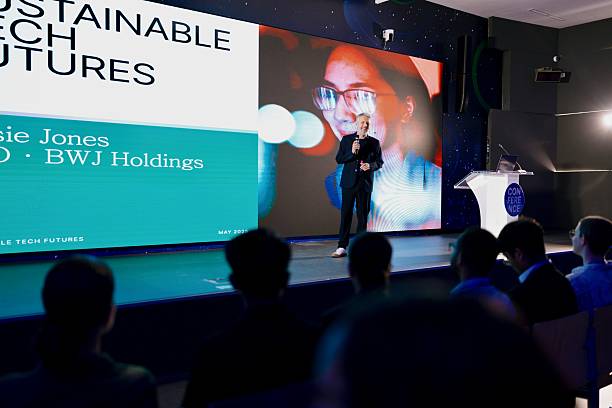
Indoor event LED displays can now be customized into polygonal, circular, or segmented designs. These configurations support narrative-driven visuals that wrap around performers, interact with lighting, and create depth. Per esempio, a curved LED screen behind a presenter can simulate a virtual environment, while side panels extend perspective, drawing the audience’s gaze naturally toward the focal point.
Seamless Integration with Stage Elements
By integrating screens with physical set pieces, designers can blur the line between digital and tangible elements. LED panels can act as virtual walls, dynamic floors, or even floating elements within the stage. Such integration amplifies storytelling, ensuring that every visual moment reinforces the event’s message.
Case in Practice
At recent high-profile launches, asymmetric LED configurations enabled brand narratives to unfold in layers. The main screen projected product visuals, while side panels displayed complementary environmental effects—clouds, lights, or interactive graphics—synchronized with live performance. The result was an elevated perception of scale and sophistication without physically enlarging the stage.
High Refresh Rates: Smooth Motion for Live and Broadcast
A frequent problem with LED screens in events is flickering or scan lines during video recording or photography. High refresh rates solve this issue, ensuring fluid visuals even under high-speed cameras or strobe lighting.
Technical Considerations
-
Refresh Rate Thresholds: Modern indoor event LED displays offer refresh rates up to 3840Hz or more, eliminating perceptible flicker in standard or slow-motion video capture.
-
Driver IC Optimization: Advanced driver ICs support high frame rendering while maintaining color consistency and brightness stability.
-
Content Synchronization: Properly synchronized media servers and LED controllers prevent tearing and latency, ensuring visuals remain perfectly aligned with live performances.
Vantaggi
High refresh rates are not just technical luxuries—they directly enhance media coverage. Television broadcasts, livestreaming, and social media videos retain high visual fidelity, increasing audience engagement and extending post-event content lifespan.
HDR and High Contrast: Depth, Realism, and Emotional Impact
HDR technology enables indoor event LED displays to present deep blacks, bright highlights, and a broad color gamut. This capability dramatically increases the perceived realism of visuals, creating a more engaging and emotionally resonant experience.
Visual Depth
HDR displays reproduce fine gradients and subtle details that traditional displays often flatten. In events, this means background visuals feel expansive, textures appear realistic, and transitions between scenes remain smooth and natural.
Audience Perception
Studies indicate that viewers subconsciously associate high visual fidelity with event quality. HDR displays enhance perceived production value, making audiences more likely to engage, share content, and respond positively to the brand or message.
Media Coverage Value
For journalists and photographers, HDR LED screens produce striking images that translate well across print, digital, and social platforms. The resulting media coverage often exceeds expectations, providing indirect returns that far surpass initial display costs.
Turning Screens Into “Thinking” Platforms
Beyond physical properties, a stage’s LED displays can contribute to dynamic storytelling by integrating interactivity and intelligent control.
Real-Time Content Adaptation
Using software-driven media servers, content can adjust based on cues from performers, live feedback, or sensor inputs. This capability transforms the LED screen from a static panel into a responsive element of the narrative.
Synchronization With Lighting and Audio
When LED screens operate in concert with stage lighting and sound, every moment becomes cohesive. Changes in screen visuals can highlight performer movements, reinforce audio cues, and guide audience focus without disrupting live flow.
Data-Driven Visuals
Some events integrate audience behavior or social media inputs directly into LED visuals. Ad esempio, tweets, votes, or reactions can be displayed live, creating a participatory experience that extends engagement beyond passive observation.
Practical Design Considerations
To maximize the impact of indoor event LED displays, event planners and production teams must balance technical capabilities with creative objectives.
-
Pixel Pitch Selection – Determine optimal pixel density based on viewing distance and venue size. Smaller pitches are ideal for close-up interaction, while larger pitches suffice for distant audience areas.
-
Brightness and Color Calibration – Ensure uniform brightness and accurate color reproduction across all panels. Regular calibration prevents color mismatch and maintains visual integrity.
-
Modular and Lightweight Panels – Facilitate flexible configuration, fast setup, and teardown, especially for touring events or temporary installations.
-
Redundancy and Reliability – Incorporate backup controllers, power supplies, and network links to prevent visual disruption during live events.
By systematically addressing these factors, indoor event LED displays become reliable, high-value assets rather than potential points of failure.
Elevating Stage Quality and ROI
Investing in advanced LED display technologies may increase upfront costs, but the resulting value is disproportionately higher:
-
Audience Engagement: Immersive visuals capture attention and create memorable experiences.
-
Media Amplification: High-quality imagery enhances media coverage and social sharing.
-
Brand Perception: The event appears more professional, sophisticated, and technologically advanced.
-
Operational Flexibility: Modular and intelligent screens allow rapid adaptation to diverse event formats and content updates.
Case studies show that doubling the budget for creative, technically advanced LED solutions can generate stage impact and media attention exceeding 300% of baseline expectations, proving that screens are not just background elements—they are active, narrative-driving participants in the event.
Conclusione: From Background to Immersive Storytelling
The era of static background screens is over. Indoor event LED displays now enable fully immersive, responsive, and visually striking experiences. By leveraging asymmetric designs, high refresh rates, HDR, e integrazione intelligente, screens evolve from passive backdrops into “thinking” platforms that enhance narrative, engage audiences, and elevate perceived production value.
For event organizers, production teams, and brands, embracing these technologies transforms a high-budget launch into a strategic investment with tangible returns in engagement, media coverage, and brand prestige. Advanced indoor event LED displays do more than present content—they create moments that audiences remember, share, and respond to long after the lights dim.
