


Why Crystal Surface Technology Changes Visual Expectations
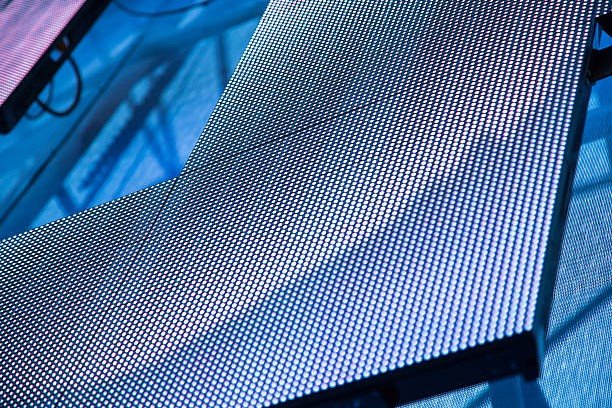
Crystal surface LED displays redefine clarity standards. As visual demands rise, brands expect displays to deliver sharper images, stronger contrast, and stable brightness across various environments. Because conventional LED modules struggle with ambient reflections and surface distortions, engineers began exploring refined optical surfaces. These refined surfaces guide light more accurately, reduce optical loss, and strengthen image uniformity. その結果, crystal surface LED displays now represent a major shift in display engineering.
The technology focuses on controlling optical behavior at the micro level. Engineers analyze how each LED emits light, how surfaces bend that light, and how environmental reflections disturb perception. Through systematic refinement, they correct these disturbances and deliver ultra-clear visuals beyond traditional LED designs.
The Optical Principles Behind Crystal Surface Precision
Crystal surface refinement relies on strict optical control. Engineers design each layer to direct light efficiently while blocking noise from external sources. Although LEDs already generate strong light output, surface irregularities can scatter or distort that output. したがって, refined surfaces must maintain strict precision.
The process begins with micro-flatness control. The surface must remain almost perfectly smooth. Even small deviations can bend light unpredictably. Engineers refine surfaces through advanced polishing techniques that achieve micro-level uniformity. This uniformity stabilizes outgoing light and enhances clarity.
さらに, optical coatings play a key role. These coatings regulate reflection, diffusion, and color consistency. When light passes through uncoated surfaces, reflections may increase glare. With controlled coatings, engineers limit unwanted reflections and guide light directly to viewers. 結果として, 結晶面LEDディスプレイ deliver sharp visuals even in bright environments.
Micro-Structured Layers That Enhance Image Fidelity
Beyond surface smoothness, crystal surfaces incorporate micro-structured layers. These layers shape the display’s optical path. Engineers design these structures to correct angular distortions and reduce light leakage.
One key formula involves directional channeling. These channels steer each beam across an optimized trajectory. Through this steering, image edges appear sharper. Even fine text remains clear from wide viewing angles. Because viewers often move across spaces, angle stability becomes essential. Crystal surface LED displays maintain visual integrity regardless of position.
Micro-etched patterns further support clarity. These patterns manage how light transitions between layers. Traditional surfaces may introduce scattering when light meets uneven material boundaries. Micro-etched structures soften this transition. They reduce scattering and deliver smoother gradients. Gradients appear more natural, and dark regions stay consistent.
The Role of Transparency and Transmission Efficiency
Crystal surface LED displays depend heavily on transmission efficiency. Because the surface must allow light to pass without distortion, engineers optimize material transparency. High-transmission glass or crystal composites become essential. These materials move light with minimal loss.
To increase efficiency, engineers adjust molecular density. Low-density materials reduce absorption. しかし, low-density materials may lack strength. したがって, engineers use hybrid crystal composites. These composites balance strength and transparency. 結果として, displays maintain durability while delivering bright output.
Transmission layers also require anti-reflective structures. These structures limit external glare. When glare decreases, perceived contrast increases. Users see deeper blacks and brighter whites. This improvement strengthens overall image clarity.
Through this balanced approach, 結晶面LEDディスプレイ achieve stable brightness without excessive power usage. High efficiency reduces power load, 熱の蓄積, and long-term stress on LED modules.
Contrast Enhancement Through Controlled Light Behavior
Sharp visuals depend on high contrast. Crystal surface refinement promotes stronger contrast by minimizing stray light. When light escapes or diffuses randomly, contrast drops. エンジニア, したがって, design surfaces that confine light within accurate boundaries.
Anti-scatter layers help maintain boundary integrity. These layers absorb stray beams and prevent halo effects. 結果として, images appear deeper and more defined.
Engineers also enhance black-level performance. Conventional LED surfaces may reflect ambient light, which brightens dark regions. Crystal surfaces suppress reflection using advanced nano-coatings. These coatings trap incoming light and maintain dark stability. その結果, displays achieve cinema-grade contrast even under strong ambient lighting.
Through controlled light behavior, crystal surface LED displays offer superior clarity. Edges remain crisp, motion appears smoother, and fast-changing content retains detail.
Color Accuracy Strengthened Through Optical Refinement
Color precision defines visual quality. Crystal surfaces improve color consistency by stabilizing the optical path. Because each color relies on specific wavelengths, surface distortions may shift perceived tone. Engineers eliminate these shifts through wavelength-specific coatings.
These coatings maintain chromatic uniformity across the display. When viewers move sideways, colors remain accurate. Traditional displays may show shifting hues at wide angles. Crystal surface LED displays avoid these shifts. They deliver consistent tones from any viewing position.
Engineers also regulate blue-light diffusion. This regulation improves clarity and prevents color bleeding. Red and green channels stay isolated, while blue wavelengths maintain precise alignment. 結果として, colors appear natural and stable.
Through optical refinement, color accuracy becomes predictable across different environments. Brands achieve consistent visual messaging regardless of lighting conditions or viewer position.
Environmental Adaptability Through Crystal Surface Control
Crystal surfaces provide strong adaptability across diverse environments. Their refined optical layers protect content integrity under bright sunlight, dark rooms, or mixed-light settings.
Anti-glare capabilities help maintain clarity outdoors. Many displays suffer from reflective interference. Crystal surfaces reduce this interference dramatically. 結果として, outdoor LED installations deliver strong readability.
Heat stability also becomes essential. Ultra-clear visuals fade when components overheat. Crystal surfaces help manage heat by improving optical efficiency. Because more light travels outward successfully, less energy becomes trapped internally. Lower trapped energy reduces overall heat build-up.
Dust protection also contributes to clarity. Crystal layers prevent particulate intrusion. Without dust accumulation, optical consistency remains stable. Maintenance cycles also shorten, increasing operational efficiency.
This environmental adaptability broadens application scenarios. 小売り, transportation hubs, corporate environments, and outdoor advertising benefit equally from this refined technology.

Structural Engineering That Supports Optical Precision
Achieving optical refinement requires structural accuracy. Engineers design frames that prevent warping and vibration. Even small distortions disrupt optical alignment. したがって, internal supports must remain rigid.
Crystal surfaces attach through high-precision bonding. This bonding maintains alignment despite temperature changes. Because thermal expansion varies across materials, engineers introduce flexible micro-joints. These joints compensate for expansion while preserving optical pathways.
Module alignment becomes equally critical. Engineers ensure each section connects seamlessly. Seamless alignment prevents visible gaps and optical misalignment. When combined with refined surfaces, the final display appears continuous.
Precision hardware strengthens durability. Edge frames protect crystal layers from stress and impact. These frames keep surfaces flat across long spans. Through stable support, optical refinement delivers its full potential.
Manufacturing Precision as the Foundation of Crystal Surface Quality
Manufacturing determines final clarity. Engineers refine each step to improve uniformity. They control material purity, polishing processes, coating thickness, and bonding strength.
Polishing requires advanced machinery. These machines work under micro-scale tolerances. Small errors cause surface waves that distort outgoing light. エンジニア, したがって, use automated systems to maintain consistency.
Coating application demands controlled environments. Dust or improper curing damages optical performance. Through cleanroom production, engineers maintain high quality.
Bonding processes rely on alignment tools. These tools secure crystal surfaces with exact force distribution. Uneven force causes cracks or distortions. Precision bonding protects the surface and ensures long-term reliability.
Manufacturing excellence supports optical refinement. Without strict quality control, 結晶面LEDディスプレイ cannot deliver ultra-clear visuals.
まとめ: The Optical Future of Crystal Surface LED Displays
Crystal surface LED displays represent a major evolution in visual engineering. Through micro-level refinement, distributed coatings, precise material control, and advanced structural alignment, these systems deliver ultra-clear visuals that outperform traditional surfaces. Their clarity, 対比, and color accuracy establish new standards across advertising and commercial environments.
Because optical refinement improves stability and environmental adaptability, crystal surface displays now meet demanding requirements in modern applications. As optical sciences advance further, these displays will grow even more precise and durable. Their refined pathways, accurate structures, and efficient light behavior position them at the forefront of the LED market.
Crystal surface LED displays clearly illustrate how optical engineering continues to redefine visual quality. Their design principles now guide the next generation of ultra-clear LED technology.
