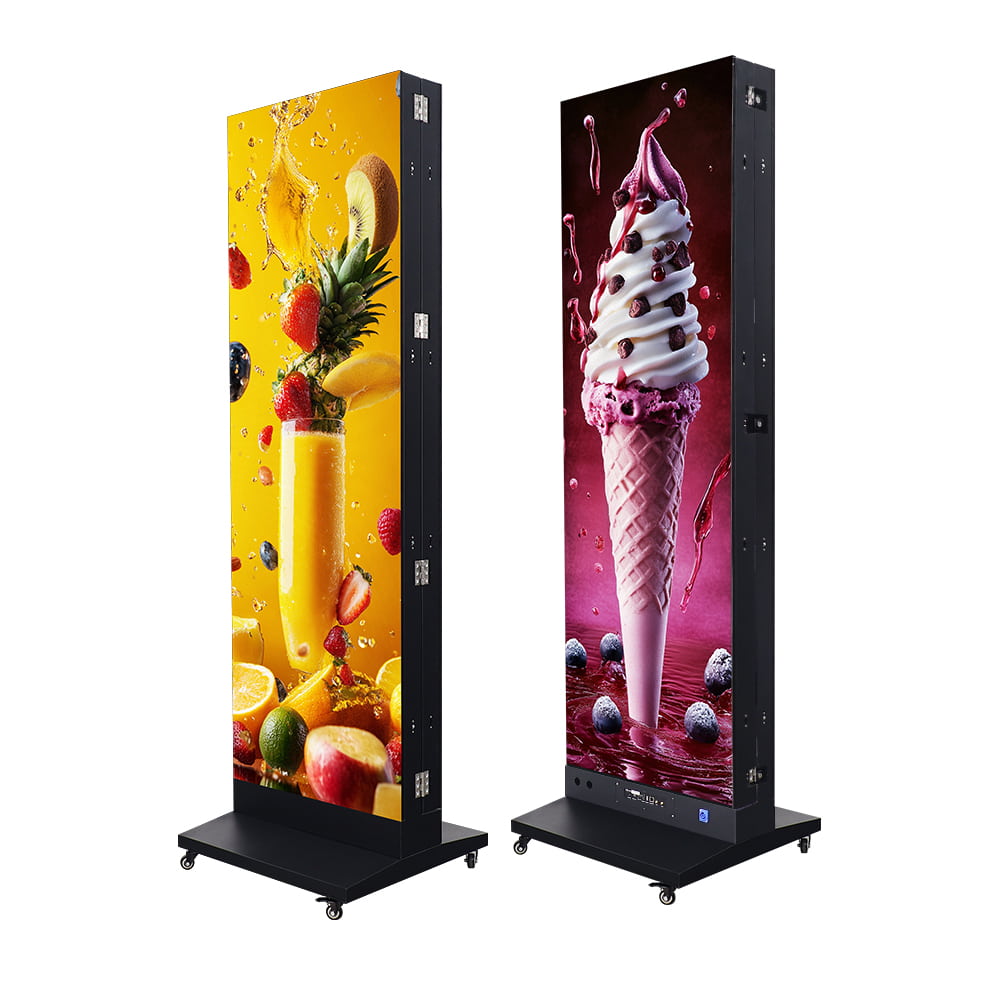
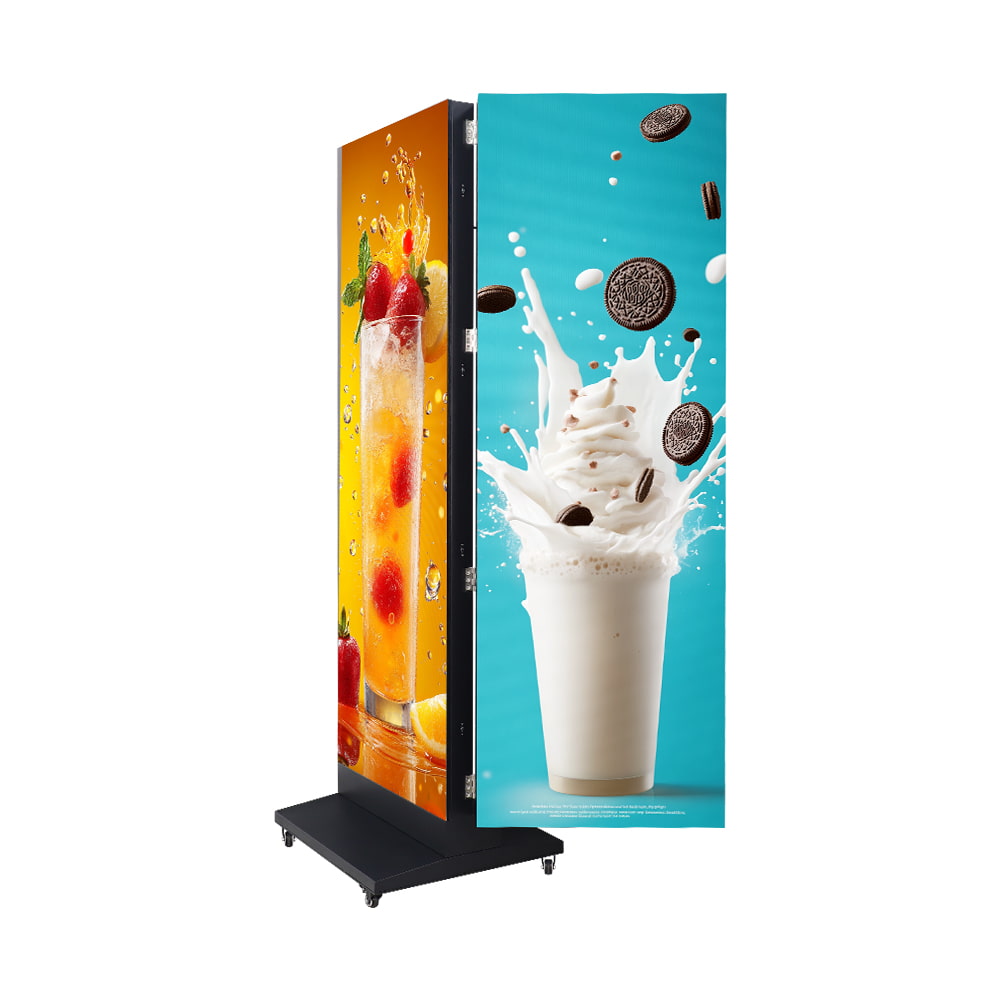
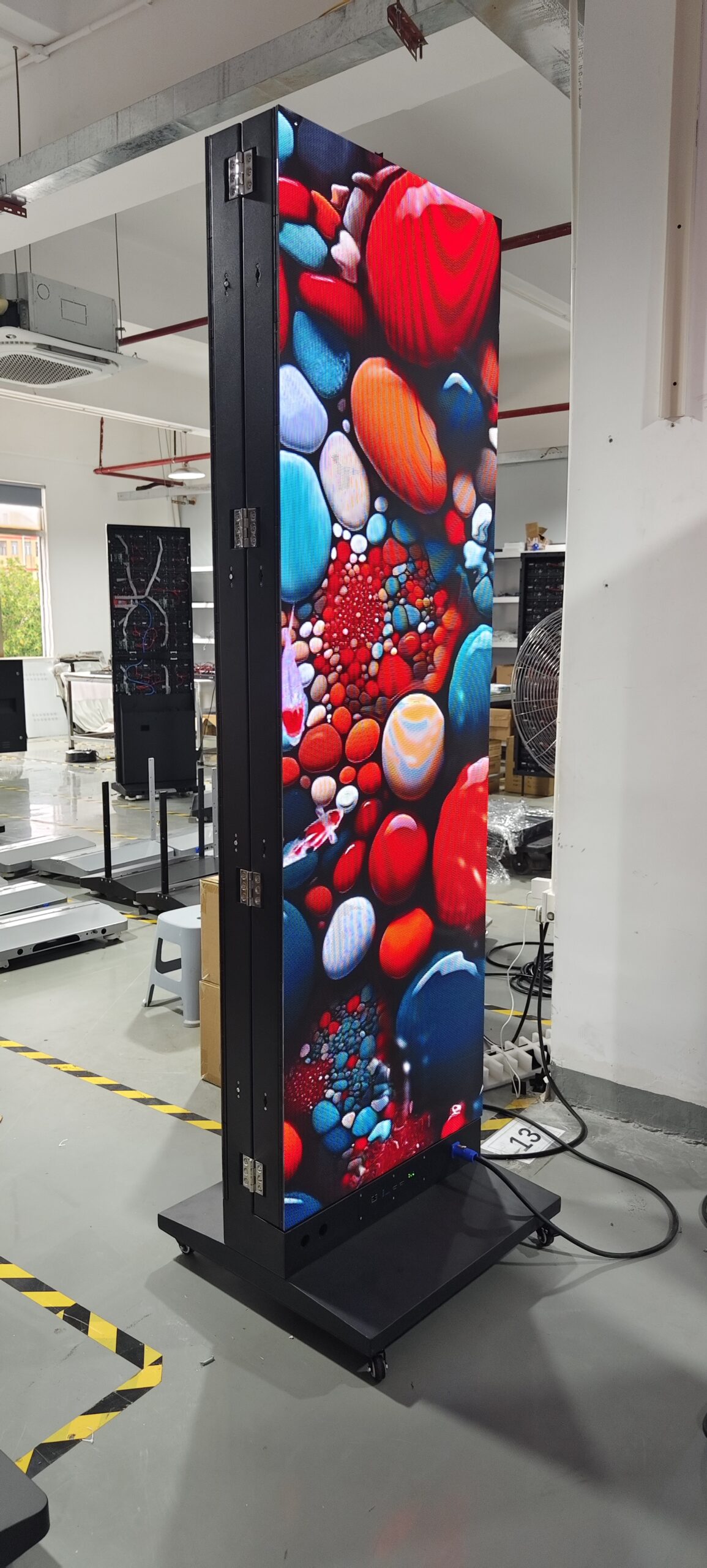
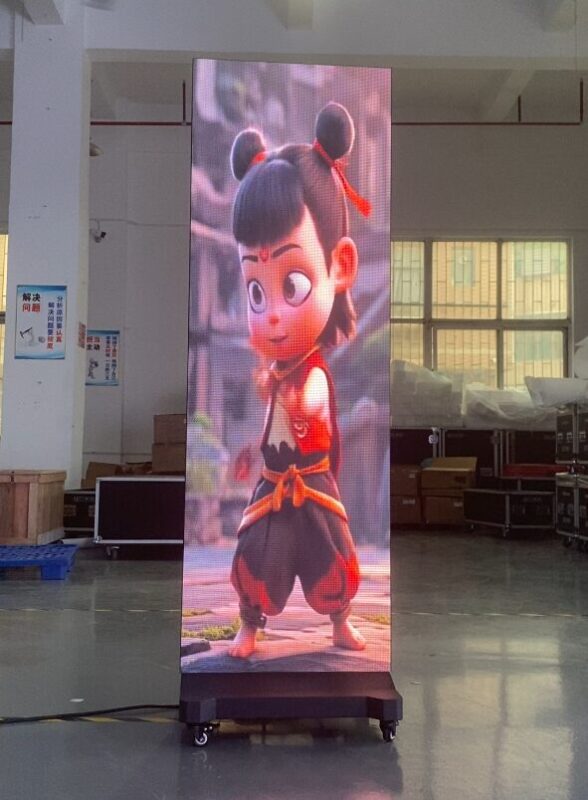
ショッピングモールでこのような「デジタルポスター」を見たことがありますか?, タピオカティーショップ, またはオフィスビル? 彼らは 10 従来の紙ポスターよりも何倍も明るい, アニメーションやプロモーションビデオを再生する, リアルタイムの食品配達の注文も表示します。 LEDポスタースクリーン.
でも知っていましたか? 幅1メートルの LEDポスタースクリーン 費用がかかる可能性があります 3,000 元 または 10,000 元. 違いは何ですか?
今日, 内部関係者がそれを打ち破る 8 「価格に影響を与える要因」 LEDポスタースクリーン 過剰な支払いや間違った購入を避けるために!
あ LEDポスタースクリーン LEDライトビーズで作られたデジタルディスプレイです。. 静止した紙のポスターとは異なります, それは示しています 動的コンテンツ—写真, ビデオ, リアルタイムデータ (天気, 在庫), コンテンツをリモートで更新できます (ポスターを貼り付けるためにはしごを登る必要はもうありません!).
最大の利点:
- 目を引く: 動的なビジュアルは静的なポスターよりも 3 倍の注目を集めます.
- フレキシブル: プロモーションを交換する 10 数分 - 印刷遅延なし.
- 長持ちする: 5~10年持続 (紙のポスターを再印刷するよりもはるかに安い).
安いものと高いものの価格差 LEDポスタースクリーン これらに帰着します 8 詳細:
ピクセルピッチ (LEDビーズ間の距離, 例えば, P2.5 = 2.5mm) 画面の鮮明さを決定します. ピッチが小さい = LED の密度が高い = 画像が鮮明 = コストが高い.

冷たい飲料業界の広告を表示するポスター LED スクリーン
アイスクリームの広告を表示する LED ディスプレイ画面

工場の生産ワークショップでテスト中のポスター LED ディスプレイ
- P2.5~P3: に最適 近くで見る (例えば, お茶屋のカウンター, 1-メートルの距離). スマートフォンのような鮮明さ. 価格: ~8,000~12,000人民元/平方メートル.
- P4~P5: に良い 中程度の表示 (例えば, モールの入り口, 3–5メートル). 明確だが詳細ではない. 価格: ~4,000~6,000人民元/平方メートル.
- P6-P8: のために 長く見る (例えば, 屋外広場, 10 メートル). 大きな文字でも読みやすい. 価格: ~2,000~3,000人民元/平方メートル.
例: 1m × 0.5m のスクリーンの価格は、P2.5 では 4,000 ~ 6,000 RMB ですが、P5 ではわずか 2,000 ~ 3,000 RMB です。. 追加のお金で「明晰さ」を買う、近くにいるときにだけ気づく.
LEDポスタースクリーン サイズは「大きければ大きいほど良い」というものではなく、「見る人の立場に合わせる」ことが重要です。:
- 小さい (0.4×0.6m): レジ, 近くで見る (1 メーター). 価格: ~1,500~3,000人民元.
- 中くらい (1×0.5m): モールの通路, 中程度の表示 (3–5メートル). 価格: ~3,000~6,000人民元.
- 大きい (2×1m): 屋外広場, 長く見る (10 メートル). 価格: ~8,000~15,000人民元.
注記: レジの 2 メートルのスクリーンは過剰です。立っている顧客にとっては眩しすぎます。 1 メートル離れたところ!
輝度 (で測定 nit) 画面が光にどれだけ耐えられるかです. ニットが多い = 目立つ = コストが高い:
- 屋内: 500–1,000ニット (お茶屋, オフィス). 安い - 太陽光と戦う必要がない.
- 屋外: 3,000–5,000ニット (モール, 場所). 直射日光に耐える必要があるため、高価になります.
落とし穴: 屋内スクリーンを屋外で使用する? 太陽の下では「真っ黒」に見えます. 屋外モデルに買い替えると倍のお金がかかることになる.
屋内 画面: 防水加工なし, プラスチック/薄型アルミフレーム. 安い.
屋外 画面: IP65防水 (雨に強い), 防塵, 厚いスチール/アルミフレーム. 屋内モデルよりもコストが 50% ~ 100% 高くなります.
ルール: 屋内用スクリーンを屋外では絶対に使用しないでください。水がかかると LED が焼き切れます。. 修理には新しい屋外用スクリーンを購入するよりも費用がかかります!
基本 LEDポスタースクリーン 動画のみを再生する. 機能を追加する, そして価格が上がります:
- タッチスクリーン: 顧客がタップして注文できるようにする (例えば, ミルクティーのお店). +20%–30%のコスト.
- リアルタイムデータ: ERPに接続する (在庫) または天気 API. +30%–50%のコスト.
- 高いリフレッシュレート: スムーズなビデオ (3840Hz 対. 1920Hz). +15%–25%のコスト.
例: 基本的な 1 メートルのスクリーンの料金 3,000 人民元. タッチスクリーン? 4,000 人民元. リアルタイムデータ画面? 4,500 人民元.
トップブランド (例えば, xvisual) 使用 高品質のコンポーネント:
- 輸入LEDチップ (サムスン, エピスター).
- 高温ICドライバー (過熱なし).
- 100,000-時間寿命 (8 時間/日 = 34 年!).
- 2-年間オンサイト保証.
価格: ~6,000~12,000人民元/平方メートル.
小規模ブランド/ホワイトレーベル:
- 国産チップが安い.
- 50,000-時間寿命 (8 時間/日 = 17 年).
- 修理の場合は自己発送 (現場でのサポートはありません).
価格: ~2,000~4,000人民元/平方メートル.
数学: トップブランドのスクリーンは安価なスクリーンの 2 倍長持ちします. 安いです 長期的な.
ハードウェアは思ったより早く増えます:
- フレーム: 鋼鉄 (~200人民元/平方メートル) 安いけど重い. アルミニウム (~400人民元/平方メートル) 軽くて錆びにくい. マグネシウム合金 (~800人民元/平方メートル) 超軽量ですが高価です.
- LEDチップ: 輸入品 (~1.5 RMB/ユニット) 対. 国内 (~0.5 RMB/ユニット). 1平方メートルのスクリーンは 1,000 LED - 輸入チップの追加 1,000 人民元.
- PCBボード: 二重層 (安定した, ~100 RMB/ボード) 対. 単層 (失敗しやすい, ~50 RMB/ボード).
例: 輸入 LED とアルミニウムフレームを備えた 1 平方メートルのスクリーンのコスト 1,200 国産LEDと鉄骨フレームで1元以上.
非同期制御: コンテンツを USB ドライブに保存する (修正されたビデオ). 安い (~500~1,000人民元).
同期制御: リアルタイム コンテンツのストリーミング (生放送, 在庫の更新). プライサー (~1,500~3,000人民元).
使用事例: 小規模店舗 = 非同期 (費用対効果の高い). 展覧会=同期 (リアルタイムのコンテンツが必要).
いいえ. ショッピングモールの入り口に (5-メーターの見方), P5 の画面は十分鮮明です. P2.5 スクリーンは 3 倍高価ですが、顧客は違いに気づきません.
絶対に違います! 水や埃により LED や電源が焼き切れる可能性があります. 修理には新しい屋外用スクリーンを購入するよりも費用がかかります.
通常は 50,000 ~ 100,000 時間. で 8 時間/日, それは17〜34歳です! 鍵: 定期的にほこりを掃除してください。ほこりは熱を遮断し、寿命を縮めます。.
この式を使用してください: サイズ=視聴距離×0.1~0.2.
- レジ (1見ています): 0.1–0.2mスクリーン (例えば, 0.6×0.4m).
- モール入口 (5見ています): 0.5–1mスクリーン (例えば, 1×0.5m).
- 屋外広場 (10見ています): 1–2mスクリーン (例えば, 2×1m).
はい - 従来のディスプレイを超えています. でももっと大きい, 画面が明るいほど消費電力が高くなります:
- 小さい (0.6×0.4m): 8 時間/日 = ~5 ~ 10 RMB/月.
- 大きい (2×1m): 8 時間/日 = 約 20 ~ 30 RMB/月.
購入する前に, 自分自身に問いかけてください 3 質問:
- どこ? 屋内 = 低輝度. 屋外 = 防水 + 高い明るさ.
- 誰が? 近くで見る = ピクセルピッチが小さい + 小型. 遠くを見る = 大きなピクセルピッチ + 大きいサイズ.
- 何? 基本動画=格安モデル. インタラクティブ性 = タッチスクリーン. リアルタイムデータ = スマートモデル.
ラストワード: あ LEDポスタースクリーンの価格は次の合計です 明瞭さ, 特徴, そして耐久性. 正しく選択してください, そしてそれは何年にもわたって「顧客の魅力」となるでしょう. 間違った選択をする, スペースを無駄にする文鎮になります.
次回お買い物するときは, 聞く: 「この画面を解決するにはどのような問題が必要ですか??”—答えはお金の節約につながります!