Вы когда -нибудь видели эти «цифровые плакаты» в торговых центрах, Пузырьковые чайные магазины, или офисные здания? Они 10 раз ярче традиционных бумажных плакатов, воспроизводить анимацию и рекламные видеоролики, и даже показывать заказы на доставку еды в режиме реального времени — вот в чем Светодиодный экран для плакатов.
Но знаете ли вы? шириной 1 метр Светодиодный экран для плакатов может стоить 3,000 юань или 10,000 юань. В чем разница?
Сегодня, инсайдер ломает 8 «факторы, влияющие на цену» светодиодные экраны для плакатов чтобы помочь вам избежать переплаты или покупки неправильного товара!
А Светодиодный экран для плакатов цифровой дисплей, изготовленный из светодиодных шариков. В отличие от статичных бумажных плакатов, это показывает динамический контент— картинки, видео, данные в реальном времени (погода, инвентарь), и позволяет обновлять контент удаленно (больше не придется подниматься по лестнице, чтобы наклеить плакаты!).
Его самые большие преимущества:
Привлекательный: Динамические изображения привлекают в 3 раза больше внимания, чем статичные постеры..
Гибкий: Обмен акциями в 10 минут — никаких задержек при печати.
Долгоиграющий: Длится 5–10 лет (намного дешевле, чем перепечатка бумажных плакатов).
II. 8 Факторы, влияющие на цены на светодиодные экраны для плакатов
Ценовой разрыв между дешевым и дорогим светодиодные экраны для плакатов сводится к этим 8 подробности:
1. Пиксельный шаг: Ясность = Стоимость
Пиксельный шаг (расстояние между светодиодными бусинами, например, P2,5 = 2,5 мм) определяет, насколько четкий ваш экран. Меньший шаг = более плотные светодиоды = более четкое изображение = более высокая стоимость.
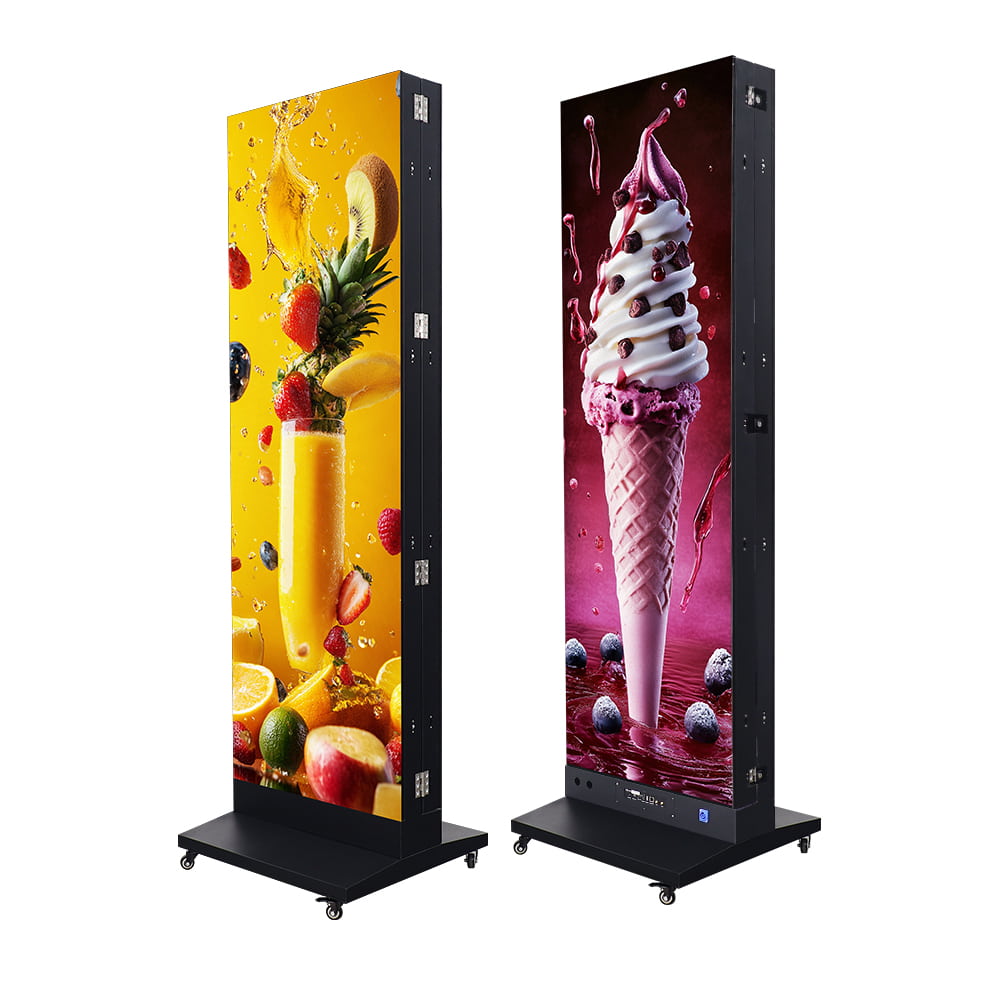
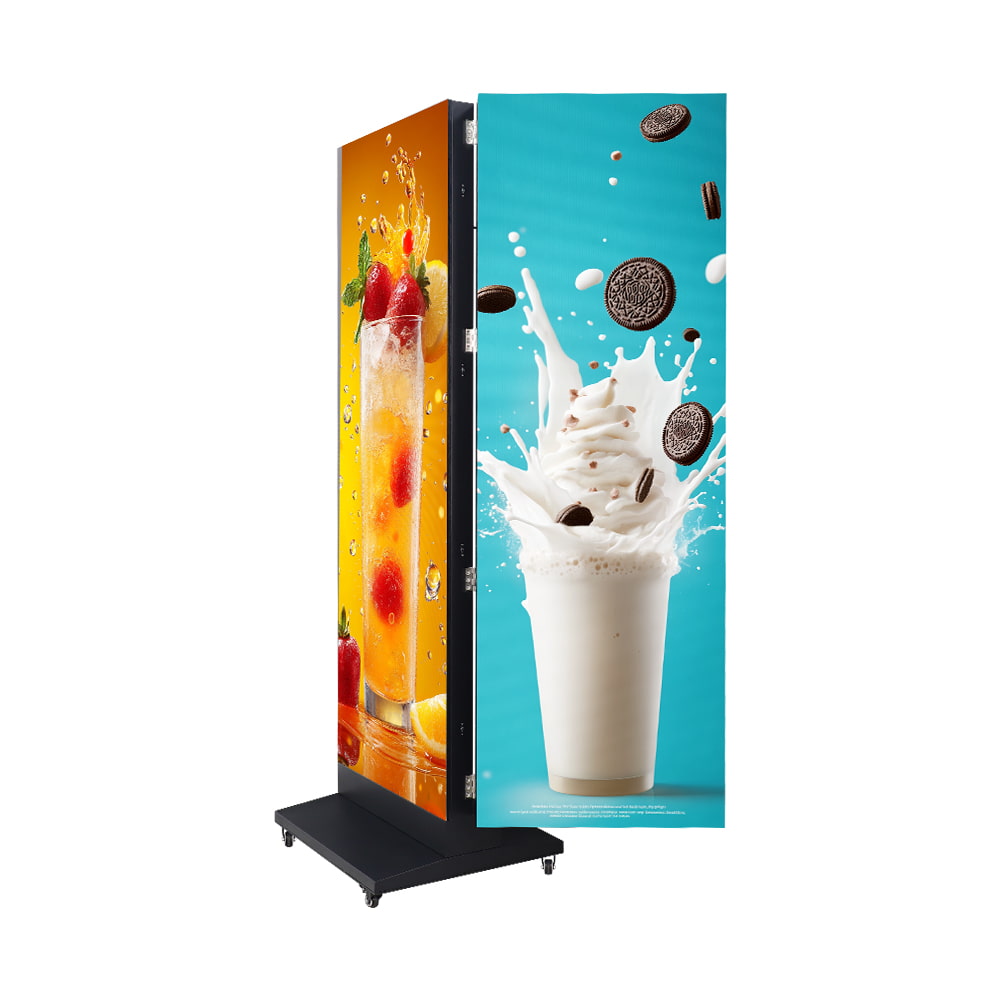
Плакатный светодиодный экран с рекламой индустрии холодных напитков.
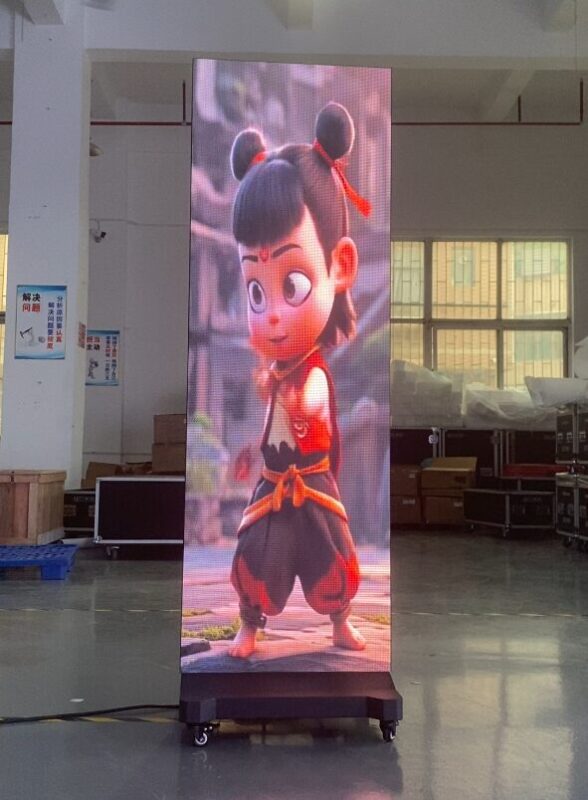
Светодиодный экран с рекламой мороженого.
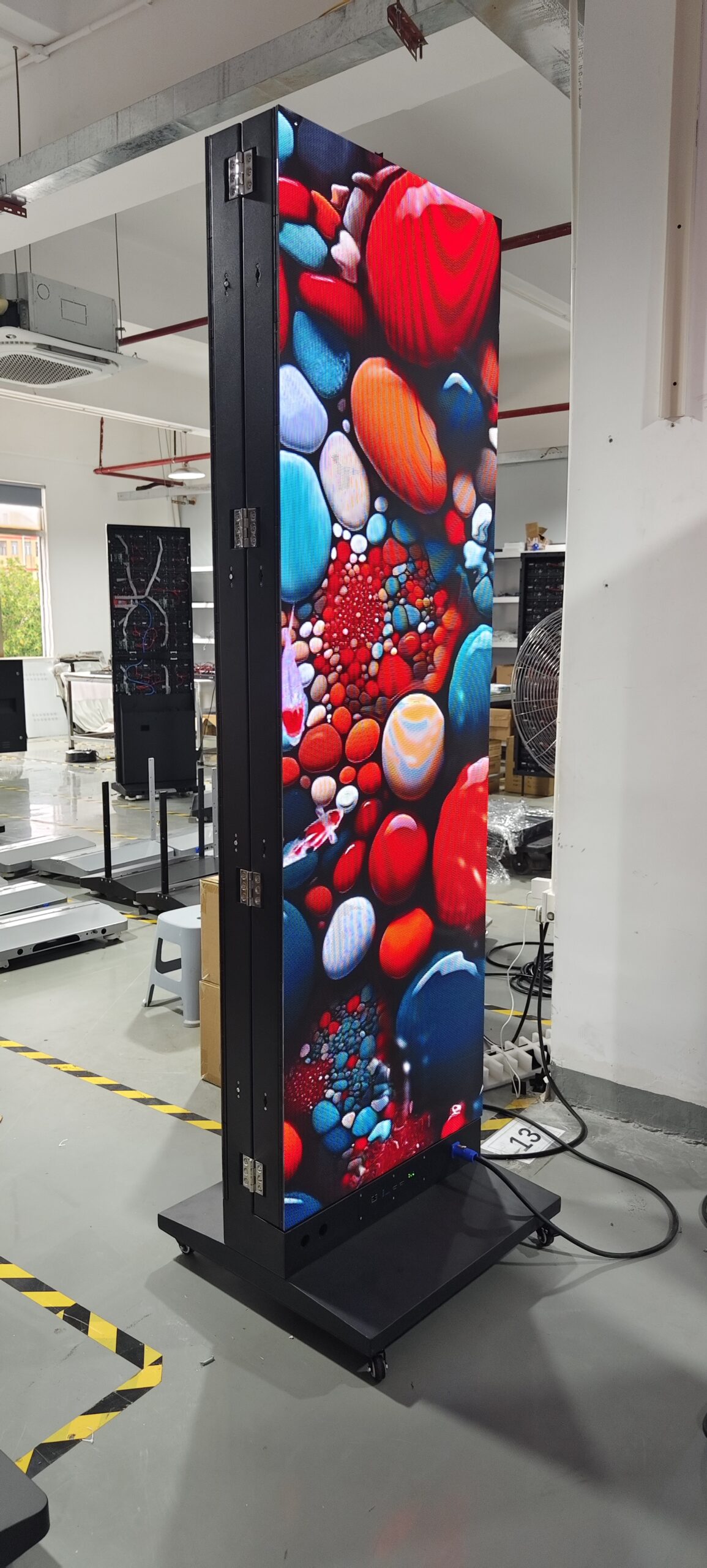
Плакатный светодиодный дисплей проходит испытания в производственном цехе завода.
П2,5–П3: Отлично подходит для закрыть просмотр (например, прилавки чайного магазина, 1-расстояние в метр). Четкость как у смартфона. Цена: ~8 000–12 000 юаней/кв.м..
П4–П5: Хорошо для средний просмотр (например, входы в торговый центр, 3–5 метров). Четко, но не сверхдетально. Цена: ~4000–6000 юаней/кв.м..
П6-П8: Для долгий просмотр (например, открытые площадки, 10 метры). Разборчиво для большого текста. Цена: ~2000–3000 юаней/кв.м..
Пример: Экран размером 1 х 0,5 м стоит 4 000–6 000 юаней для P2,5 и всего 2 000–3 000 юаней для P5.. Дополнительные деньги приносят «ясность», которую вы заметите, только если приблизитесь.
2. Размер: Сопоставьте это с расстоянием просмотра (Не покупайте слишком большую сумму!)
Светодиодный экран для плакатов размер – это не принцип «чем больше, тем лучше», а вопрос «поместиться там, где стоят зрители».:
Середина (1×0,5м): проходы торгового центра, средний просмотр (3–5 метров). Цена: ~3000–6000 юаней.
Большой (2×1м): Открытые площадки, долгий просмотр (10 метры). Цена: ~ 8 000–15 000 юаней.
Примечание: Двухметровый экран на кассе — это перебор, он будет слишком бросаться в глаза стоящим покупателям. 1 метр на расстоянии!
3. Яркость: Крытый против. На открытом воздухе требуется в 3 раза больше гнид
Яркость (измеряется в ниты) насколько хорошо ваш экран борется со светом. Больше нит = больше заметно = выше стоимость:
В помещении: 500–1000 нит (чайные магазины, офисы). Дешево — не нужно бороться с солнечным светом.
На открытом воздухе: 3,000–5000 нит (торговые центры, места). Должен противостоять прямому солнечному свету — так дороже.
ловушка: Использование внутреннего экрана на открытом воздухе? На солнце он будет выглядеть «затемненным». В конечном итоге вы заплатите вдвое, чтобы заменить его уличной моделью..
4. Крытый против. Открытый дизайн: Гидроизоляция удваивает цену
В помещении экраны: Нет гидроизоляции, пластиковые/тонкие алюминиевые рамы. Дешевый. На открытом воздухе экраны: IP65 водонепроницаемый (сопротивляется дождю), пыльно -надежный, толстые стальные/алюминиевые рамы. Стоит на 50–100 % дороже, чем модели для внутреннего использования..
Правило: Никогда не используйте внутренние экраны на открытом воздухе — вода может сжечь светодиоды.. Ремонт обойдется дороже, чем покупка нового уличного экрана.!
Пример: Стоимость экрана площадью 1 кв.м с импортными светодиодами и алюминиевой рамкой 1,200 Юань больше одного с отечественными светодиодами и стальной рамой.
8. Система управления: Контент в реальном времени = более высокая стоимость
Асинхронное управление: Храните контент на USB-накопителе (фиксированные видео). Дешевый (~500–1000 юаней). Синхронное управление: Потоковая передача контента в реальном времени (прямые трансляции, обновления инвентаря). Ценник (~1500–3000 юаней).
Вариант использования: Маленькие магазины = асинхронно (экономически эффективный). Выставки = синхронно (нужен контент в реальном времени).
III. Общие вопросы о светодиодных экранах для плакатов
1. Всегда ли меньший шаг пикселя лучше??
Нет. Для входа в торговый центр (5-просмотр счетчика), экран P5 достаточно четкий. Экран P2.5 в 3 раза дороже, но клиенты не заметят разницы.
2. Можно ли использовать внутренние экраны на открытом воздухе?
Абсолютно нет! Вода и пыль могут сжечь светодиоды и блоки питания.. Ремонт обойдется дороже, чем покупка нового уличного экрана..
3. Какова продолжительность жизни?
Обычно 50 000–100 000 часов.. В 8 часов/день, это 17–34 года! Ключ: Регулярно очищайте от пыли: пыль блокирует тепло и сокращает срок службы..
4. Как выбрать размер?
Используйте эту формулу: Размер = расстояние просмотра × 0,1–0,2.
Кассовый аппарат (1м просмотр): 0.1– экран 0,2 м (например, 0.6×0.4m).
Вход в торговый центр (5м просмотр): 0.5– экран 1 м (например, 1×0,5м).
Открытая площадь (10м просмотр): 1– экран 2 м (например, 2×1м).
5. Являются ли они энергоэффективными??
Да — больше, чем традиционные дисплеи. Но больше, более яркие экраны потребляют больше энергии:
IV. Заключительные советы: Выберите правильный светодиодный экран для плакатов
Перед покупкой, спроси себя 3 вопросы:
Где? В помещении = низкая яркость. Открытый = водонепроницаемый + высокая яркость.
ВОЗ? Просмотр вблизи = маленький шаг пикселя + маленький размер. Удаленный просмотр = большой шаг пикселя + большой размер.
Что? Базовые видео = дешевая модель. Интерактивность = сенсорный экран. Данные в реальном времени = умная модель.
Последнее слово: А Светодиодный экран для плакатовцена представляет собой сумму ясность, функции, и долговечность. Выбирайте правильно, и он будет «магнитом для клиентов» на долгие годы. Выберите неправильный, и это будет пресс-папье, занимающее много места.
В следующий раз, когда вы будете делать покупки, просить: «Для решения какой проблемы мне нужен этот экран?»?» — ответ сэкономит вам деньги!
Вы когда-нибудь восхищались этими яркими, гигантские экраны в торговых центрах, которые можно свободно комбинировать и разделять? Вы когда-нибудь хотели поздороваться...
Светодиодные экраны плаката иногда сталкиваются с такими проблемами, как сбои обнаружения устройств, искаженные изображения, или размытый контент во время воспроизведения мультимедиа..