


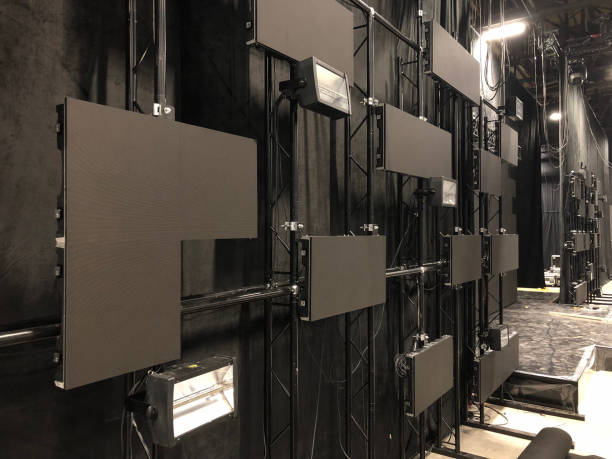
In the traditional architectural and advertising world, a “screen” was once a predefined object—a heavy, rectangular box with fixed dimensions that dictated the design of the space around it. However, the advent of SMD LED display panels combined with modular engineering has completely inverted this relationship. Today, the screen no longer dictates the space; the space dictates the screen.
SMD technology now delivers elite pixel density and color uniformity. These breakthroughs enable a “LEGO-style” modular architecture. This synergy has birthed the “Digital Canvas” era. Brands and architects can now transform any surface. They use mall atriums and curved walls as programmable carriers. These displays project both light and deep emotion. Modular SMD systems offer total creative freedom. Designers no longer face technical constraints. Only their imagination limits the final display.
1. The SMD Breakthrough: The Micro-Physics of Perfect Color
To understand why SMD LED display panels have become the gold standard for high-end digital canvases, we must look at the “Surface Mount Device” technology itself.
The Anatomy of an SMD Pixel
Unlike older DIP (Dual In-line Package) technology, where red, green, and blue LEDs were separate bulbs, SMD technology integrates all three primary colors into a single, tiny package.
-
Color Mixing at the Source: Because the three colors are encapsulated in one unit, the color mixing occurs at the microscopic level. This eliminates “color fringing” and ensures that even at close viewing distances, the whites are pure and the gradients are silky smooth.
-
Pixel Density and Clarity: The flat, compact nature of SMD components allows for a much tighter “pixel pitch” (the distance between pixels). This leads to high-definition resolutions that rival traditional LCDs but with the brightness and scale that only LED can provide.
Uniformity Across the Canvas
A digital canvas is only effective if it appears as a single, unified image. SMD panels offer superior wide-viewing angles (often up to 160°). This ensures that whether a customer is looking at a mall display from directly underneath or from a side balcony, the colors remain vivid and the brightness stays consistent.
2. Modular Architecture: The “LEGO” Logic of Infinite Expansion
If SMD technology provides the “paint,” then modularity provides the “canvas.” A professional SMD LED display panel system is built from small, standardized units that lock together with mechanical precision.
Seamless Stitching and Precision Frames
Traditional screens have bezels—the black frames around the edges. When you put four TVs together, you see a cross of black lines. Modular LED panels are “borderless.”
-
Micro-Adjustment Systems: High-end modules feature precision-engineered connectors that allow technicians to adjust the alignment in increments of 0.1mm.
-
Visual Continuity: The result is a truly “seamless” display. To the human eye, a 50-meter-wide wall looks like one continuous piece of digital glass, allowing content to flow across the surface without being “cut” by physical seams.
Infinite Scalability
The modular nature means there is no “maximum size.” You can start with a 5-square-meter display for a product launch and, as the brand grows, add more modules to create a 50-square-meter immersive backdrop. This scalability protects the user’s investment, as the hardware grows alongside their marketing needs.
3. Breaking the Box: Creative Geometry and Irregular Shapes
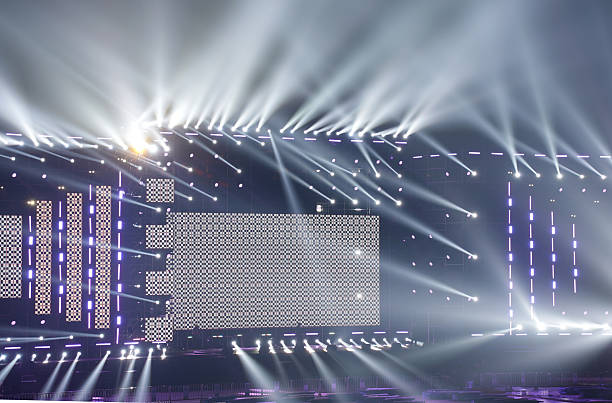
The most exciting aspect of the modular SMD LED display panels revolution is the ability to move beyond the rectangle. We are no longer restricted to 16:9 aspect ratios.
-
Right-Angle and 90-Degree Corners: Specialized edge-cut modules allow for the creation of digital “cubes” or screens that wrap around sharp corners. This is the foundation of “Naked Eye 3D” effects that appear to pop out of buildings.
-
Curved and Cylindrical Canvases: Flexible SMD modules use soft PCB materials, allowing the screen to bend. You can wrap a digital canvas around a structural pillar in a showroom or create a “wave” ceiling that mimics the sky.
-
Irregular Logos and Art Installations: By arranging modules in a staggered or non-linear fashion, designers can create screens shaped like brand logos, triangles, or abstract art. The software “maps” the content to the shape, ensuring the image remains undistorted regardless of the geometry.
4. From Static Wall to “Digital Atmosphere”: Smart Integration
A “Digital Canvas” is more than just a screen; it is a programmable environment. Modern SMD LED display panels are integrated with advanced control systems that allow for real-time responsiveness.
Cloud Synchronization and Remote Content
In a global retail environment, a brand can update the “canvas” in 500 stores simultaneously from a central headquarters. Because each panel is a digital node, the system can monitor the “health” of every pixel, ensuring that the visual experience is never compromised by a faulty module.
Interactive Sensory Input
By integrating sensors (cameras, infrared, or touch-sensitive overlays), the digital canvas can react to the movement of people. As a customer walks past a digital wall in a flagship store, the “paint” on the canvas can ripple like water or follow their shadow, creating a deep emotional connection between the brand and the individual.
5. The Economics of the Digital Canvas: Longevity and ROI
Investing in a modular SMD system is an exercise in long-term value. Unlike traditional signage that must be torn down and replaced when a campaign ends, the digital canvas is infinitely reusable.
-
Front-Service Maintenance: Professional SMD LED display panels feature magnetic front-access. If a module fails, it can be replaced in under 30 seconds with a specialized vacuum tool. The rest of the screen remains active, ensuring zero downtime for the brand.
-
Energy Efficiency: Modern SMD drivers are designed for “Common Cathode” technology, which reduces heat and power consumption by up to 30%. This makes massive, wall-sized canvases financially viable for 24/7 operation.
-
Future-Proofing: If the resolution requirements of the industry change (e.g., from 4K to 8K), the structural framework of the wall often remains the same; the owner may only need to upgrade the internal modules, significantly reducing the cost of modernization.
6. Conclusion: Architecture as Media
Walls are no longer silent boundaries; they are dynamic storytellers. SMD precision and modular flexibility have transformed architecture into immersive media. These displays turn any space into a “Digital Canvas” for brand expression.
Modular LED walls serve as the ultimate tool for spatial transformation. They can create tranquil “digital forests” in hospitals or high-energy “cyberpunk” malls. Every surface becomes a window into a programmed world.
Brands no longer simply buy a product. They claim a platform that evolves alongside their unique vision. In future commercial spaces, every wall is a portal waiting to be activated.
